

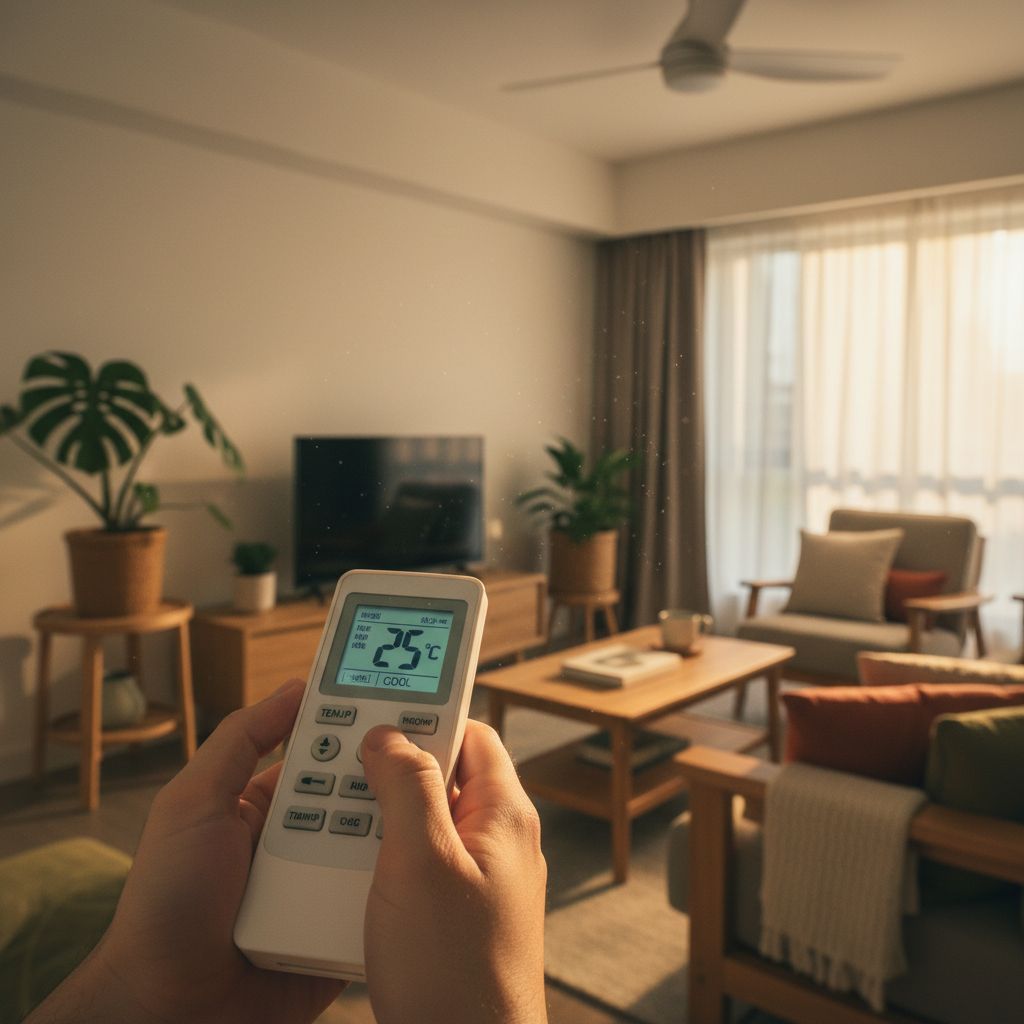
The High Cost of Cooling: Understanding Your Aircon Electricity Bill in Singapore
Singapore residents know that living near the equator means year-round tropical heat, relentless humidity, and an unyielding reliance on air conditioning. When you open your monthly utility bill from SP Group, cooling often accounts for more than half of the total domestic power consumption. Managing your aircon electricity bill Singapore households face every month requires understanding exactly how electrical energy is converted into heat extraction, how environmental variables affect system load, and why neglected equipment forces your compressor to consume excessive kilowatt-hours (kWh).
Every degree Celsius lower you set your thermostat and every micro-layer of grime on your cooling coils forces the internal machinery to work harder against thermodynamics. In a standard 4-room or 5-room HDB flat or a private condominium in Singapore, running three to four multi-split fan coil units for eight to twelve hours a day can quickly push your monthly utility expenses past 300 or 400 dollars. With electricity tariffs reflecting global fuel costs and grid transmission charges, optimizing your cooling setup is essential. Implementing actionable methods to save electricity aircon usage demands is not just about turning the unit off; it is about maximizing thermal efficiency, choosing the right operating modes, and maintaining optimal heat exchange surfaces.
To reduce your overall power consumption, you must treat your split system as a thermal heat pump. Heat is absorbed from the indoor air via the evaporator coil inside your room and transferred outdoors through the condenser coil situated on your exterior aircon ledge. When that heat transfer cycle is obstructed, the unit draws substantially more current to achieve the desired room temperature. Understanding the mechanical and environmental bottlenecks allows homeowners across estates like Jurong, Tampines, Punggol, Woodlands, and Bedok to cut hundreds of dollars from their annual energy expenditure without sacrificing comfort.
The Anatomy of a Singapore SP Group Utility Bill
Your monthly utility statement calculates electricity consumption based on the total number of kilowatt-hours (kWh) drawn by your household appliances multiplied by the prevailing tariff rate set by the Energy Market Authority (EMA) and regulated through SP Group. High-power home appliances like electric water heaters, induction cookers, and clothes dryers consume power intermittently, but air conditioners run continuously for hours at a stretch. A typical non-inverter multi-split system or an older inverter model running inefficiently can pull anywhere from 1.5 kW to 3.5 kW of electrical power across several rooms simultaneously.
If your household runs three air conditioners rated at a combined 2.5 kW for eight hours every night, you consume approximately 20 kWh per day. Over a 30-day billing cycle, this equates to 600 kWh dedicated strictly to overnight sleeping comfort. At an average tariff rate of roughly 30 to 32 cents per kWh (inclusive of GST), night-time cooling alone accounts for nearly 190 dollars per month. Adding weekend afternoon usage or daytime work-from-home cooling can double that figure. Pinpointing the mechanical load of each aircon unit helps identify whether power spikes stem from extended operational hours, incorrect thermostat settings, or degraded thermal transfer caused by internal dust buildup.
How Tropical Heat and 80-90% Relative Humidity Inflate Power Usage
Singapore experiences ambient outdoor temperatures ranging from 28 to 34 degrees Celsius alongside relative humidity levels that routinely exceed 80 to 90 percent. Air conditioners do not merely cool the air; they perform two distinct thermodynamic tasks: sensible cooling (lowering the actual dry-bulb temperature of the air) and latent cooling (condensing and removing moisture vapour from the atmosphere). In high-humidity climates, latent cooling consumes a significant portion of your aircon energy efficiency budget.
When moist, warm tropical air passes over the cold evaporator coils of your indoor unit, water vapour condenses into liquid runoff, which drains out via the PVC drainage pipe. This phase change requires substantial thermal energy. If warm outdoor air constantly infiltrates your home through poorly sealed casement windows, unsealed main door gaps, or poorly insulated sliding balcony doors, the aircon must continually dehumidify incoming ambient air. The compressor cannot down-throttle into its low-frequency energy-saving state because the sensible and latent thermal loads remain permanently elevated. This leads to continuous high-current operation, driving up your power bill.
The Hidden Electrical Penalty of Poorly Maintained Units
A pristine air conditioner operates near its factory-rated Energy Efficiency Ratio (EER). However, as weeks pass, dust, pet dander, lint, and airborne cooking oils coat the fine aluminium cooling fins and the cylindrical blower fan wheels. This accumulated biofilm acts as an insulating blanket across the evaporator coil, preventing the refrigerant inside the copper pipes from absorbing thermal energy effectively from the ambient air.
When thermal exchange is compromised, the temperature sensor (thermistor) registers that the room has not yet reached the setpoint temperature. In response, the system commands the compressor to maintain maximum rotational frequency. At the same time, a dust-laden cross-flow blower wheel loses its aerodynamic efficiency, requiring higher motor power to move a lower volume of air (measured in cubic feet per minute, or CFM). Homeowners often mistakenly lower the remote control setting to 18 or 20 degrees Celsius to compensate for weak airflow, compounding the electrical drain. Professional mechanical cleaning through aircon servicing saves power by immediately stripping away airflow blockages and restoring factory-grade thermal conduction.
Temperature and Mode Optimization: Dialling in Maximum Aircon Energy Efficiency
The operational settings on your aircon remote control govern the electronic expansion valve, the variable-speed inverter compressor, and the internal fan motor. Selecting suboptimal modes or demanding unrealistic thermal differentials between the indoor space and Singapore tropical outdoor climate is one of the quickest ways to inflate your power bill. Fine-tuning your thermostat and operational modes generates instant, measurable savings on your next SP Group statement.
Many homeowners operate their units under the misconception that setting the remote to 18 degrees Celsius cools a room faster. Modern air conditioners deliver cooling capacity at their rated maximum rate until the setpoint is approached, regardless of whether the thermostat is set to 18 or 25 degrees. Demanding an unnaturally low temperature simply keeps the compressor running at peak electrical draw indefinitely because a standard residential unit in Singapore can rarely sustain an 18-degree indoor temperature against external solar radiation and wall heat storage.
Tip 1: The Magic 25 Degrees Celsius Benchmark
Every single degree Celsius that you raise your air conditioner thermostat saves approximately 6 to 10 percent on the electrical energy consumed by the compressor. Setting your system to 25 or 26 degrees Celsius strikes the perfect thermodynamic balance between human thermal comfort and electrical conservation in Singapore. The human body perceives thermal comfort through a combination of dry-bulb temperature, relative humidity, and air velocity. At 25 degrees Celsius with moderate air motion, the body sheds metabolic heat efficiently without requiring the compressor to drop into deep sub-cooling cycles.
Lowering your thermostat from 21 degrees down to 18 degrees can double the electricity consumption of that specific indoor unit. Conversely, shifting from 22 degrees up to 25 degrees reduces the thermal workload on the refrigeration circuit by roughly 25 to 30 percent over an eight-hour operating window. If you operate three bedroom units nightly across a typical BTO layout in Punggol or Sengkang, this single operational adjustment can translate into 40 to 60 dollars of direct savings every month.
Tip 2: Pair Air Conditioning with Ceiling or Standing Fans
One of the most effective ways to lower your aircon electricity bill Singapore wide is to leverage the wind-chill effect. A ceiling fan, standing DC motor fan, or circulating fan uses only 15 to 45 watts of electrical power, a fraction of the 800 to 2,000 watts drawn by an aircon compressor. By circulating cool air rapidly across your skin, a fan increases the rate of convective heat loss and sweat evaporation, making a 26-degree Celsius room feel like 23 degrees.
When you set your air conditioner to 25 or 26 degrees Celsius and pair it with a low-wattage fan running on low or medium speed, you eliminate thermal layering in the room (where cold air pools on the floor while warm air sits at ceiling height). The mixed air passes across the indoor thermistor evenly, allowing the inverter controller to ramp down the compressor to its lowest cruising frequency much faster. This simple pairing enables total room comfort with significantly lower kilowatt-hour consumption.
Tip 3: Utilize Dry Mode During Humid Monsoon Months
During the Northeast and Southwest monsoon seasons, Singapore experiences prolonged rainfall, leading to indoor humidity levels exceeding 85 percent even when outdoor temperatures drop to a relatively cool 26 or 27 degrees Celsius. In these circumstances, your room feels warm, sticky, and clammy not because of excess sensible heat, but because the air is saturated with moisture, which impedes your body natural evaporative cooling mechanism.
Switching your aircon from Cool Mode to Dry Mode (represented by a water droplet icon on most remote controls) prioritizes latent heat extraction over sensible cooling. In Dry Mode, the compressor runs at low cycles while the indoor blower fan spins at its lowest possible speed. This allows humid room air to linger over the ice-cold evaporator coil longer, condensing the maximum amount of water vapour without excessively chilling the room. Because the compressor cycles on low duty and the fan motor draws minimal current, Dry Mode provides superior humidity relief while consuming up to 30 to 40 percent less electricity than standard Cool Mode running at low temperature setpoints.
Tip 4: Leverage Eco Mode and Sleep Timers for Overnight Cooling
Your core body temperature naturally drops during sleep, and the ambient outdoor temperature in Singapore gradually declines by two to three degrees between midnight and 6:00 AM. Continuing to run your air conditioner at maximum output throughout the entire night is unnecessary and energy-inefficient. Modern units from manufacturers like Daikin, Mitsubishi Electric, Panasonic, and Midea feature dedicated Eco Mode and Sleep Timer functions designed to prevent overcooling.
Activating Sleep Mode programs the microcomputer inside your fan coil unit to automatically raise the setpoint temperature by 0.5 to 1.0 degree Celsius every two hours over the course of the night. If you go to sleep with the aircon set at 24 degrees, the unit will step up to 25 degrees by 2:00 AM and 26 degrees by 4:00 AM. This gradual increase tracks your body thermal requirements perfectly while slashing nighttime power draw by up to 20 percent. Alternatively, setting an off-timer to shut down the compressor at 5:00 AM allows residual cool air to keep the room comfortable until your morning alarm rings.
Architectural and Room Optimization to Prevent Thermal Leakage
An air conditioner can only cool an enclosed space efficiently if that space is properly insulated from external thermal energy. Singapore residential architecture features large window openings, concrete building envelopes that store radiant solar heat, and ventilation paths that can undermine your cooling system if left unmanaged. Treating your room as a sealed thermal zone dramatically reduces the heat load your aircon must conquer.
When external heat enters your living space via conduction through walls and radiation through window glass, your air conditioner must run continuously to counteract that heat gain. Addressing structural thermal leaks across your HDB, condominium, or landed home allows the room to cool down significantly faster and stay cool longer, enabling the compressor to switch into its lowest power-consumption state.
Tip 5: Install Heavy Blackout Curtains or Solar Window Films
Solar radiation penetrating standard single-glazed window glass is the largest source of radiant heat gain in Singapore homes, particularly for units facing East (absorbing intense morning sun) or West (absorbing harsh afternoon sun). Direct sunlight passing through unshaded glass heats floor tiles, furniture, and internal walls, converting light energy into stored thermal energy that radiates into the room long into the evening.
Installing high-grade blackout curtains with thermal backing or applying spectrally selective solar window films can reject up to 60 to 80 percent of infrared heat and 99 percent of UV rays. By blocking solar heat before it enters the room, you reduce the sensible heat load placed on your air conditioning unit. In west-facing master bedrooms across estates like Jurong West or Punggol Waterway, high-performance solar window films can lower ambient indoor wall temperatures by as much as three to four degrees Celsius, eliminating hours of heavy compressor workload.
Tip 6: Seal Door and Window Gaps in HDB and Condominium Flats
Cool air is denser than warm air, causing it to naturally sink and seek egress through gaps underneath bedroom doors, main entry doors, and around sliding window tracks. Simultaneously, warm, humid outdoor air is drawn into the room through these same crevices to equalize atmospheric pressure differentials. This continuous air exchange introduces unwanted heat and moisture into the air-conditioned envelope.
Applying affordable self-adhesive neoprene weatherstripping along window frame edges and installing a bottom door brush or silicone draft stopper underneath bedroom doors creates a tight thermal seal. Sealing these gaps prevents conditioned cold air from spilling into uncooled hallways or kitchen zones. In a standard BTO bedroom, eliminating a half-inch gap beneath the door can decrease room temperature rebound rates by 40 percent, preventing the aircon from cycling back up to high electrical capacity every few minutes.
Tip 7: Reduce Indoor Heat Sources and High-Wattage Electronics
Every electrical device running inside your air-conditioned room generates internal heat gain that your cooling system must actively work to neutralize. Desktop gaming computers, large OLED television panels, multi-monitor setups, halogen lamps, and high-wattage home appliances radiate continuous thermal wattage into the immediate airspace.
A high-performance gaming PC equipped with an intensive graphics card can dissipate between 400 and 700 watts of thermal energy directly into a small bedroom. This forces your aircon to expend an equivalent amount of cooling energy simply to maintain equilibrium before it even begins cooling the room air. To save electricity aircon units otherwise waste, keep non-essential electronics turned off, switch all domestic lighting to low-heat LED fixtures, and avoid operating heat-generating appliances like clothes steamers, vacuum cleaners, or rice cookers inside rooms while the air conditioning is actively running.
Tip 8: Match Room Volume to the Correct BTU Capacity
Using an incorrectly sized air conditioner severely degrades electrical efficiency. Cooling capacity in Singapore is measured in British Thermal Units (BTU) per hour or Kilowatts (kW). If a unit is undersized for the cubic volume of a room, the compressor will run at 100 percent capacity continuously, unable to lower the air temperature to the setpoint, leading to massive power bills and premature component failure.
Conversely, an oversized unit will cool the room air too quickly without running long enough to remove ambient moisture, resulting in a cold, clammy atmosphere that encourages mold growth. For standard Singapore HDB and condo room dimensions, the general sizing benchmarks are:
- Master Bedrooms & Living Rooms (18 to 25 sqm): 12,000 to 18,000 BTU capacity.
- Standard Common Bedrooms (10 to 14 sqm): 9,000 BTU capacity (System 2, 3, or 4 setups).
- Large Open-Concept Living/Dining Zones (30 to 45 sqm): 18,000 to 24,000 BTU capacity.
If you are planning a renovation or replacing older equipment, consult our comprehensive guide to aircon installation to ensure your indoor fan coils and outdoor condenser matches your specific floor plan dimensions and thermal load requirements.
Hardware and Technology: Why Upgrading to an Inverter Aircon Pays Off
The core electro-mechanical architecture of your air conditioning system dictates its baseline electrical efficiency. The National Environment Agency (NEA) rates all consumer air conditioners sold in Singapore under the Mandatory Energy Labelling Scheme (MELS), assigning tick ratings from 1 tick (least efficient) to 5 ticks (most efficient). Investing in modern hardware and optimizing equipment placement generates compounding electricity savings year after year.
Modern inverter systems utilize brushless direct-current (BLDC) compressors paired with pulse-width modulation (PWM) controllers to adjust motor speed precisely to match the real-time cooling demand of the room. This stands in stark contrast to legacy non-inverter systems that operate strictly on a binary, all-or-nothing duty cycle.
Tip 9: Switch from Non-Inverter to a 5-Tick Inverter Aircon
In a non-inverter aircon, the compressor runs at 100 percent maximum speed until the room temperature reaches the setpoint, at which point the motor cuts out entirely. As the room warms up, the compressor restarts with a massive electrical inrush current (LRA - Locked Rotor Amps), consuming heavy surges of power repeatedly throughout the day and night. This constant start-stop cycle causes large temperature swings and consumes vast amounts of electricity.
An inverter aircon, by contrast, ramps up to maximum speed to cool the room quickly, and then dials its operational frequency down to a gentle, continuous low-power cruising speed once the setpoint is reached. By avoiding repeated start-stop cycles and running smoothly at low RPM, a 5-tick inverter aircon consumes up to 50 to 60 percent less electricity than an older non-inverter unit or a low-efficiency 2-tick model. Over a five-year lifespan, the electricity savings generated by a 5-tick system easily exceed the initial equipment purchase and installation cost.
Tip 10: Position Outdoor Condenser Units for Optimal Heat Dissipation
The outdoor condenser unit is where thermal heat extracted from your indoor rooms is rejected into the outside atmosphere. If your outdoor unit is installed in a restricted, poorly ventilated aircon ledge or surrounded by clutter, laundry racks, or structural walls, the expelled hot air recirculates back into the condenser coil. This phenomenon, known as short-cycling or thermal recirculation, causes ambient temperatures around the condenser to soar past 45 degrees Celsius.
When the outdoor coil cannot dissipate heat efficiently, the high-side refrigerant pressure rises sharply. This forces the compressor motor to work against extreme head pressure, drastically increasing the electrical current (amperage) drawn by the system. Ensuring unobstructed airflow across the outdoor unit, keeping the condenser ledge free of storage boxes, and regularly inspecting the outdoor heat exchanger ensures optimal thermal rejection and protects your aircon energy efficiency.
Tip 11: Invest in Smart Thermostats and Automated Timers
Human error is a leading contributor to inflated utility bills. Leaving an air conditioner running in an empty bedroom or forgetting to turn off the living room unit before leaving for work can waste 5 to 15 kWh of electricity in a single day. Modern smart controllers, Wi-Fi-enabled wall plates, and smart IR blasters allow you to automate cooling schedules and monitor energy consumption remotely via smartphone applications.
Using geo-fencing features, smart controllers can automatically power down your air conditioning system when all family members leave the home and turn it back on at 26 degrees Celsius ten minutes before you arrive. Automated schedules can switch units to Eco Mode after midnight, transition to fan-only operation near dawn, and ensure that no cooling unit ever runs unattended in an unoccupied room.
Regular Maintenance: How Regular Aircon Servicing Saves Power
Even the most advanced 5-tick inverter system will gradually degrade into an energy-wasting machine if neglected. In Singapore tropical, dusty urban environment, airborne particles, skin flakes, textile fibers, and mold spores continuously accumulate inside indoor fan coil units. Understanding how regular maintenance preserves thermal transfer efficiency is vital to keeping electricity consumption low.
When an air conditioner is clean, air glides smoothly over clean aluminium fins, refrigerant absorbs heat rapidly, and the blower fan moves maximum air volume with minimal rotational resistance. The following maintenance protocols ensure that your cooling equipment operates at peak electrical efficiency throughout its operational life.
Tip 12: Clean Mesh Filters Every Fortnight
The primary line of defense inside your indoor unit is the high-density mesh pre-filter located directly beneath the front plastic panel. These filters capture large airborne debris, dust bunnies, and pet hair. In typical Singapore residential environments, these filters become visibly coated with grey dust within two to three weeks of daily operation.
A choked air filter starves the indoor blower fan of intake air, creating a partial vacuum inside the casing. This air restriction reduces heat exchange across the cooling coil, forcing the compressor to run at high speed for twice as long to lower room temperature. Homeowners should unclip the mesh filters every fortnight, rinse them gently under running tap water without harsh detergents, let them air dry completely in the shade, and snap them back into place. This five-minute DIY task immediately restores intake airflow and prevents unnecessary power draw.
Tip 13: Schedule Professional General Aircon Servicing Quarterly
While washing mesh filters removes surface debris, microscopic dust particles and fungal spores pass straight through the mesh, settling deep between the micro-grooves of the aluminium cooling fins and clinging to the cross-flow blower wheel. Over three to four months, this forms a dense, sticky mat of dirt that cannot be reached with DIY methods.
Professional general aircon servicing saves power by using specialized water pressure flushes, industrial vacuum extraction, and coil fin grooming to clean the indoor evaporator, clear internal blockages, and sanitize the condensation tray. Routine quarterly servicing restores system airflow velocity, lowers the electrical amperage drawn by the indoor blower motor, and allows the refrigeration circuit to transfer heat at peak thermodynamic efficiency. At Uncle 7 Aircon, our transparent servicing rates make routine preventative maintenance exceptionally affordable for HDB, condo, and commercial owners alike.
Tip 14: Clear Clogged Drainage Trays and Water Pipes
Accumulated dust and moisture create a breeding ground for bacterial slime and algae inside your aircon condensation drip tray and PVC drain pipe. As jelly-like slime builds up, it causes standing water to pool in the tray. This standing water increases internal humidity inside the casing, accelerates corrosion on the bottom tube sheets of the evaporator coil, and eventually triggers water leakage down your interior walls.
During professional routine servicing, technicians flush the drainage network with high-pressure suction and water, eliminating jelly clogs before they cause overflow emergencies. Keeping the drainage line clear prevents localized mold accumulation, protects sensitive electronic sensor circuits from moisture damage, and ensures smooth thermodynamic operation across all indoor units.
Uncle 7 Aircon Professional Servicing Rates and Efficiency Table
Uncle 7 Aircon operates on a strictly transparent, one-time servicing model with no hidden contracts, no hard sales pitches, and no inflated packages. All service appointments start from 9:00 AM daily across all residential and small commercial properties in Singapore. Below is our clear pricing schedule for general servicing and diagnostic inspections:
| Service Type | Number of Units | Price (SGD) | Estimated Duration | Key Energy Efficiency Benefits |
|---|---|---|---|---|
| General Aircon Servicing | 1 Unit | $40 | ~15 mins / unit | Restores coil airflow, cleans filters and drain tray, improves cooling speed. |
| General Aircon Servicing | 2 Units | $100 | ~30 mins total | Clears surface dust across two rooms, reducing compressor cycle duration. |
| General Aircon Servicing | 3 to 9 Units | $18 per unit | ~15 mins / unit | Maximum value for 3-room, 4-room, 5-room HDB flats and Condos; restores full airflow balance. |
| General Aircon Servicing | 10+ Units | $10 per unit | ~15 mins / unit | Ideal for large landed homes, small offices, and light commercial setups. |
| On-Site Diagnostic Repair Inspection | Per Call-Out | $40 | ~20 to 30 mins | Pinpoints electrical faults, thermistor issues, and gas leaks with transparent quotes before work starts. |
To schedule your one-time servicing session and start saving on your monthly electricity bill, check our complete transparent pricing structure or reach out directly to Uncle 7 Aircon via WhatsApp or call at 9431 1589.
Deep Chemical Restorations: Chemical Wash, Chemical Overhaul, and Gentle Steam Wash
When an air conditioner has been neglected for over a year, regular surface servicing is no longer sufficient. Airborne oils, grease from cooking, and deep mold colonies calcify inside the tight gaps between the evaporator coil fins, forming a hardened barrier that resists standard water flushes. In such cases, deep chemical restorations are required to restore baseline thermal conductivity and rescue your equipment from severe electrical inefficiency.
A choked cooling coil can reduce heat exchange efficiency by as much as 40 to 50 percent, forcing the compressor to pull maximum continuous wattage while barely producing cold air. Choosing the correct deep restorative procedure restores original factory performance, lowers your power bills, and extends the lifespan of your equipment.
Tip 15: Restore Restricted Airflow with a Targeted Chemical Wash
A professional chemical wash involves applying specialized non-corrosive chemical cleaning solutions directly onto the installed evaporator coil fins, cross-flow blower wheel, and water collection tray. The chemical foam breaks down stubborn grease, chemical residues, nicotine stains, and compacted fungal matter that cannot be removed with water alone.
Once the chemical solution has dissolved the grime, the entire assembly is thoroughly rinsed with pressurized water to flush away all chemical residues and dislodged contaminants. A chemical wash instantly unclogs the intricate airway pathways of the cooling coil, restoring unrestricted airflow and allowing the refrigerant to absorb heat instantly. This drops compressor current draw back to factory specifications, delivering immediate power savings.
Tip 16: Complete Rejuvenation with a Chemical Overhaul for Severely Choked Units
For fan coil units suffering from severe mold infestations, severe water leakage, rusted bracket components, or years of total neglect, a full chemical overhaul is the definitive restorative solution. During an overhaul, our technicians completely dismantle the indoor fan coil unit from the wall, disconnecting the electrical control boards, electronic sensors, drain pans, and the entire evaporator coil assembly.
Every individual component is cleaned, submerged, and treated in specialized chemical baths to strip away rust, deep-seated scale, and bacterial blockages. The blower fan bearings are lubricated, and the entire unit is reinstalled and pressure-tested. At Uncle 7 Aircon, our chemical overhaul costs a flat rate of $100 per unit and includes a complimentary refrigerant gas top-up if required, providing unmatched value to restore total cooling performance and maximum electrical efficiency.
Tip 17: Sanitize Coils Safely with a Gentle Steam Wash
Homeowners who are sensitive to chemical odors or have young infants, elderly family members, or respiratory sensitivities can opt for a Gentle Steam Wash. This eco-friendly deep cleaning method utilizes high-temperature thermal vapor delivered under controlled pressure to melt away accumulated grime, sanitize biological pathogens, and kill mold spores without the use of harsh chemical solvents.
The intense thermal energy of the steam liquefies sticky oils and breaks surface tension across the aluminum cooling fins, allowing trapped debris to flush away cleanly down the drainage system. The Gentle Steam Wash leaves zero chemical residue, deodorizes the indoor air completely, and restores unobstructed heat transfer, allowing your aircon to cool faster while consuming less electrical power.
Deep Cleaning Methods Comparison Table
Choosing the right deep cleaning method depends on the condition of your air conditioning units, the elapsed time since your last service, and your household environmental preferences. The table below outlines our deep cleaning options:
| Cleaning Method | Uncle 7 Aircon Pricing | Service Duration | Process Breakdown | Ideal Scenario |
|---|---|---|---|---|
| Chemical Wash | 1 Unit: $60 2 Units: $80 3 Units: $90 4+ Units: $28/unit |
~30 mins / unit | On-wall chemical foam application, coil fin deep rinse, blower wheel clean, high-pressure drainage flush. | Units unserviced for 6-12 months with foul odors, sluggish cooling, or visible coil grime buildup. |
| Chemical Overhaul | Flat $100 per unit (Includes gas top-up if needed) | ~60 mins / unit | Complete unit dismantling from wall, total chemical immersion, parts lubrication, circuit testing, refrigerant top-up. | Severely choked units, persistent water dripping, heavy mold buildup, or zero cooling output after years of neglect. |
| Gentle Steam Wash | Quote based on system setup | ~30-45 mins / unit | High-temperature hot vapor deep clean, thermal sanitization, 100% chemical-free, deep coil deodorization. | Eco-conscious homes, households with newborn babies, pets, or individuals with severe allergies or asthma. |
Operational Habits, Airflow Management, and Usage Scheduling
Even with pristine hardware and a modern 5-tick inverter system, poor day-to-day operational habits can quietly inflate your electrical consumption. The way air is directed within the room, how you handle short absences, and how you manage initial startup cooling loads all play a critical role in determining your monthly SP Group electricity bill.
Developing energy-conscious habits requires zero capital investment and yields immediate financial returns. By making minor changes to how your household interacts with your air conditioning systems, you can achieve optimal room comfort while using fewer kilowatt-hours.
Tip 18: Avoid Constant On-Off Cycling Throughout the Day
A common misconception among homeowners is that switching off an inverter air conditioner when leaving the room for 15 to 30 minutes saves electricity. In reality, repeatedly turning an inverter unit off and on during short intervals often increases total energy consumption. When you turn off the air conditioner, the room rapidly absorbs heat from exterior walls, windows, and surrounding rooms.
When you return 20 minutes later and switch the unit back on, the inverter compressor must run at 100 percent maximum frequency for an extended period to pull that accumulated heat load back down to 25 degrees Celsius. If you are stepping out briefly to run an errand or prepare a meal, it is significantly more energy-efficient to leave the inverter unit running and simply raise the thermostat by two degrees (e.g., from 25 to 27 degrees Celsius). The inverter compressor will maintain its ultra-low, energy-saving cruising frequency without having to undergo an energy-intensive high-power recovery cycle later.
Optimize Airflow Direction: Angle Louvers Horizontally or Upward
Basic physics dictates that cold air is heavier and denser than warm air, causing it to naturally sink toward the floor, while warm air rises toward the ceiling. Many users make the mistake of pointing their air conditioner motorized louvers straight down at their bed or sofa. This creates localized cold spots near the floor while leaving the upper half of the room warm and unconditioned.
Because the aircon temperature sensor is located near the top intake grille of the indoor unit, it measures the warmer air rising to the ceiling. If the louvers point downward, the sensor continues to detect high temperatures, causing the compressor to run longer than necessary. Always angle your motorized louvers horizontally or slightly upward. This allows the cool air to travel across the top of the room and gently descend through natural convection, creating uniform room cooling and allowing the thermistor to register the setpoint faster.
Pre-Cool Rooms Strategically Before Peak Heat Hours
During exceptionally hot months in Singapore, outdoor temperatures peak between 1:00 PM and 4:00 PM. Trying to cool a sweltering room during these peak solar hours forces the compressor to battle extreme heat conduction through hot concrete walls and ceiling slabs. This requires high electrical current to overcome thermal inertia.
If you work from home or anticipate needing a cool room in the early afternoon, pre-cool the space starting at 11:30 AM or 12:00 PM while outdoor temperatures and wall heat storage are still relatively low. Once the room internal thermal mass (walls, furniture, flooring) is stabilized at 25 degrees Celsius, the inverter system can easily cruise at minimum power consumption through the hottest hours of the afternoon, avoiding heavy electrical spikes.
Diagnosing Mechanical Faults: When Repairs Prevent Massive Electricity Spikes
When an air conditioning system develops internal mechanical or electrical faults, its energy efficiency drops sharply. A system struggling with failing electronic capacitors, worn fan motor bearings, out-of-calibration thermistors, or low refrigerant levels will continue running, but it may consume two to three times its normal electrical wattage while failing to cool your home properly.
Recognizing the early warning signs of mechanical distress allows homeowners to schedule timely professional aircon repair, preventing minor component faults from turning into catastrophic compressor burnout and massive utility bills. At Uncle 7 Aircon, we provide transparent on-site diagnostic inspections for a flat fee of $40, providing you with an upfront, itemized quote before any repair work begins.
Identifying Faulty Thermistors and Run Capacitors
The thermistor is the electronic temperature sensor responsible for reading the temperature of the return air entering the indoor unit and signaling the printed circuit board (PCB) to throttle the compressor up or down. Over time, thermistors can drift out of electrical resistance calibration due to moisture exposure and thermal fatigue.
If a thermistor is faulty, it may continuously report an indoor temperature of 29 degrees Celsius even when the room has already dropped to 22 degrees. This prevents the inverter compressor from ever throttling down into its energy-saving mode, causing it to run at peak capacity indefinitely. Similarly, a degrading run capacitor on a fan motor causes the motor to draw excessive current while spinning at sub-optimal RPM, wasting electricity and generating excessive internal heat. Replacing these small electronic components quickly restores precise system regulation and optimal power efficiency.
Refrigerant Leaks: The Silent Power Drain
Air conditioners operate on a closed refrigeration loop charged with specialized refrigerants such as R32 or R410A. Refrigerant is not consumed like fuel; it continuously cycles between liquid and gas states to carry heat outdoors. However, copper pipe corrosion, flare joint vibration loosening, or microscopic coil punctures can lead to slow refrigerant leaks over time.
When refrigerant pressure drops below optimal operating parameters, the cooling system loses its ability to absorb heat. The evaporator coil may start freezing up, forming a block of ice, while the compressor works under extreme load, running continuously without cycling down. If your aircon is blowing lukewarm air, hissing quietly, or developing frost on the indoor copper pipes, it is operating in a state of severe electrical distress. Our technicians locate the leak point, repair the integrity of the pipework, and restore the exact manufacturer-specified refrigerant charge to return the system to peak EER efficiency.
Diagnostic Inspection and Transparent Troubleshooting
Attempting to fix complex electrical and refrigeration issues without professional diagnostic equipment can lead to misdiagnosed problems, wasted money, and hazardous electrical conditions. Uncle 7 Aircon technicians carry advanced digital manifold gauges, clamp meters, and electronic leak detectors to quickly determine the exact root cause of your system inefficiency.
We believe in 100% upfront transparency. When you book an inspection with our team, our technician diagnoses the exact fault, explains the required corrective action, and provides an all-inclusive quote on the spot. If you choose not to proceed with the repair, you only pay the flat $40 on-site diagnostic fee. We do not offer long-term contracts or push unnecessary replacements; we simply deliver straightforward, professional repairs that get your cooling system back to peak performance.
Aircon Electricity Consumption Calculations and ROI Breakdown
To truly understand how much money you can save by optimizing your cooling habits and maintaining your air conditioners, it helps to examine real-world calculations based on Singapore current electricity tariffs and typical residential usage patterns. The financial return on investment (ROI) from regular maintenance and proper usage habits is immediate and substantial.
Whether you reside in a compact 3-room BTO flat in Woodlands or an expansive private condominium in Bukit Timah, the laws of electrical thermodynamics apply equally. Below is a detailed breakdown illustrating how small operational improvements translate into major dollar savings across your annual utility budget.
Calculating Exact Monthly Running Costs in Singapore
To calculate the monthly running cost of an air conditioning unit, you can use the standard electrical consumption formula:
Monthly Cost (SGD) = Power Consumption (kW) x Daily Operating Hours x 30 Days x Electricity Tariff ($/kWh)
Consider a standard bedroom inverter fan coil unit rated at an average power consumption of 0.8 kW (800 watts) while maintaining a room at 25 degrees Celsius, assuming an electricity tariff of $0.32 per kWh:
- Running 8 hours per night: 0.8 kW x 8 hours x 30 days x $0.32 = $61.44 per month for a single bedroom.
- For a 3-bedroom household: $61.44 x 3 units = $184.32 per month.
If those same units are dirty, clogged, and set to 19 degrees Celsius without fan support, their average continuous power draw jumps to 1.5 kW per unit:
- Running 8 hours per night at 1.5 kW: 1.5 kW x 8 hours x 30 days x $0.32 = $115.20 per month per unit.
- For 3 neglected units: $115.20 x 3 units = $345.60 per month.
- Potential Monthly Savings: $345.60 - $184.32 = $161.28 per month ($1,935.36 saved per year!).
Non-Inverter vs Inverter Aircon 5-Year Energy Cost Breakdown
When choosing between maintaining an older non-inverter aircon or replacing it with a high-efficiency 5-tick inverter system, analyzing the total five-year life cycle operating cost reveals why modern inverter technology is the superior investment for Singapore homeowners:
| Parameter / Cost Factor | Legacy Non-Inverter System (3 Units) | Modern 5-Tick Inverter System (3 Units) | 5-Year Net Difference |
|---|---|---|---|
| Average Power Draw During Operation | 1.6 kW per unit | 0.7 kW per unit | 56% reduction in average power draw |
| Daily Energy Consumed (8 hrs/day) | 38.4 kWh / day total | 16.8 kWh / day total | 21.6 kWh saved every single day |
| Monthly SP Utility Cost (@ $0.32/kWh) | $368.64 per month | $161.28 per month | $207.36 monthly savings |
| 1-Year Cumulative Energy Cost | $4,423.68 | $1,935.36 | $2,488.32 annual savings |
| 5-Year Cumulative Energy Cost | $22,118.40 | $9,676.80 | $12,441.60 total savings over 5 years! |
How Servicing ROI Generates Immediate SP Utility Savings
Many homeowners delay professional air conditioning maintenance because they view it as an unnecessary expense. However, analyzing the financial return reveals that professional servicing pays for itself almost immediately through reduced electrical draw. An unserviced, dust-choked system wastes between 20 to 30 percent more electricity every single day.
For a household operating three bedroom units, quarterly general servicing with Uncle 7 Aircon costs only $54 total ($18 per unit for 3 units). If that servicing eliminates a 25 percent energy penalty on a $250 monthly air conditioning bill, the household saves approximately $62.50 every month in electrical power. Over a three-month quarterly cycle, investing $54 in professional servicing yields $187.50 in direct utility bill savings, generating a net profit of over $130 in your pocket every quarter.
Explore our wide collection of educational articles to learn more about extending equipment lifespan, troubleshooting common faults, and maintaining energy-efficient cooling throughout your home.
Frequently Asked Questions (FAQ)
How much electricity does an aircon consume per hour in Singapore?
A modern 5-tick inverter air conditioner in Singapore typically draws between 0.6 kW and 1.2 kW per hour when cooling a standard bedroom to 25 degrees Celsius. At current SP Group electricity tariffs of around $0.30 to $0.32 per kWh, this translates to roughly $0.18 to $0.38 per hour of operation per unit. Older non-inverter systems or poorly maintained, dirty units can easily consume 1.5 kW to 2.0 kW per hour, pushing the running cost past $0.60 per hour per room.
Does general aircon servicing really lower my electricity bill?
Yes, regular general aircon servicing directly lowers your electricity bill by removing insulating dust and dirt layers from the evaporator coil fins and blower wheel. Clean heat exchanger surfaces allow the refrigerant to absorb room heat rapidly, while an unobstructed fan moves maximum air volume with minimal motor resistance. This enables your inverter compressor to throttle down to its low-frequency energy-saving mode much faster, reducing overall electricity consumption by 15 to 30 percent.
What temperature setting saves the most electricity on an aircon?
Setting your thermostat to 25 or 26 degrees Celsius saves the most electricity while maintaining comfortable indoor conditions in Singapore. Every single degree Celsius you raise your thermostat reduces the electrical workload on the compressor by roughly 6 to 10 percent. Pairing a 25 or 26-degree setpoint with a low-wattage ceiling or standing fan creates a wind-chill effect that makes the room feel like 23 degrees Celsius while keeping power consumption low.
Is it cheaper to leave an inverter aircon on all day or turn it off and on?
If you are leaving the room for only 15 to 30 minutes, it is generally cheaper to leave an inverter aircon running and raise the thermostat by two degrees rather than turning it off completely. Turning the unit off allows heat and humidity to build up inside the room. When turned back on, the inverter compressor must run at 100 percent maximum capacity for a prolonged period to remove that accumulated heat, consuming more total energy than if it had remained cruising at its lowest operational frequency.
What is the difference between a Chemical Wash and a Chemical Overhaul?
A chemical wash is an on-wall deep cleaning procedure where technicians apply chemical foam directly onto the mounted cooling coil and blower wheel to strip away stubborn grime and surface mold, taking about 30 minutes per unit. A chemical overhaul involves completely dismantling the entire indoor fan coil unit from the wall, taking it apart, and soaking all components in individual chemical baths to remove deep scale, internal rust, and heavy mold infestations. An overhaul takes about 60 minutes per unit and includes a complimentary refrigerant gas top-up with Uncle 7 Aircon.
How often should I clean my aircon filters myself to save power?
You should wash your aircon mesh filters every two weeks to maintain optimal airflow and energy efficiency. In Singapore urban environment, airborne dust and fibers quickly accumulate on the mesh, restricting intake airflow and forcing the fan motor and compressor to work harder. Rinsing the filters under running tap water every fortnight takes only five minutes and immediately prevents unnecessary electricity waste.
Why does my aircon blow cold air but my electricity bill keeps increasing?
If your aircon feels cold but your electricity bills are climbing, your system is likely suffering from internal thermal transfer resistance or sensor drift. Dirty evaporator coils, clogged outdoor condenser fins, or a miscalibrated thermistor can force the compressor to run at maximum wattage for hours without throttling down, even after the room feels cool. A low refrigerant charge can also force the compressor to work against abnormal pressures, drawing high electrical current.
What are the servicing prices and working hours of Uncle 7 Aircon?
Uncle 7 Aircon provides professional, one-time servicing across all of Singapore with clear, upfront pricing. Our general servicing rates are $40 for 1 unit, $100 for 2 units, $18 per unit for 3 to 9 units, and $10 per unit for 10 or more units. Chemical wash is $60 for 1 unit, $80 for 2 units, $90 for 3 units, and $28 per unit for 4 or more units. A chemical overhaul is a flat $100 per unit (including gas top-up if needed). We do not offer maintenance contracts or warranties. Our service hours start at 9:00 AM daily with no after-hours service. You can book an appointment by calling or sending a WhatsApp message to 9431 1589.
Does Uncle 7 Aircon service all brands and property types across Singapore?
Yes, Uncle 7 Aircon provides comprehensive servicing across all property types, including HDB flats, BTO units, private condominiums, landed estates, and small commercial offices throughout all service areas across Singapore. Our experienced technicians service all major air conditioning brands, including Daikin, Mitsubishi Electric, Panasonic, Midea, Fujitsu, Hitachi, LG, and Samsung.
When should I choose a Gentle Steam Wash over a Chemical Wash?
You should choose a Gentle Steam Wash if your household includes newborn infants, elderly family members, pets, or individuals with respiratory conditions like asthma or chemical sensitivities. The Gentle Steam Wash uses high-temperature pressurized steam vapor to sanitize coils, eliminate bacteria, and melt away light-to-moderate dirt without using harsh chemical cleaners, leaving zero chemical residue while effectively restoring cooling performance and energy efficiency.
RELATED ARTICLES
How Often Should You Service Your Aircon in Singapore? (2026 Frequency Guide)
Living in Singapore means relying heavily on air conditioning to stay comfortable against year-round heat and tropical humidity. With ambient temperatures frequently exceeding 32 degrees Celsius and r
Maintenance TipsAircon Gas Top-Up Singapore: R22 vs R410A, Costs, Signs and Leak Repairs
Every homeowner in Singapore relies heavily on their split-unit or multi-split air conditioning systems to combat the unrelenting equatorial heat and high ambient humidity. When a cooling unit suddenl
Aircon ProblemsAircon Smells Bad? Musty, Sour and Burning Odours Explained (Singapore Guide)
When you switch on your air conditioner after a long, humid day in Singapore, you expect a crisp wave of cool, refreshing air. Instead, you are hit with a pungent, unpleasant stench that fills your be