

1. Why Your Aircon Smells Bad: The Singapore Climate Factor
When you switch on your air conditioner after a long, humid day in Singapore, you expect a crisp wave of cool, refreshing air. Instead, you are hit with a pungent, unpleasant stench that fills your bedroom or living room. If your aircon smells bad, you are far from alone. An aircon bad odour Singapore issue is one of the most frequent complaints raised by homeowners across HDB flats in Woodlands, BTO developments in Tengah, private condominiums in Tanjong Rhu, and landed residences in Bukit Timah.
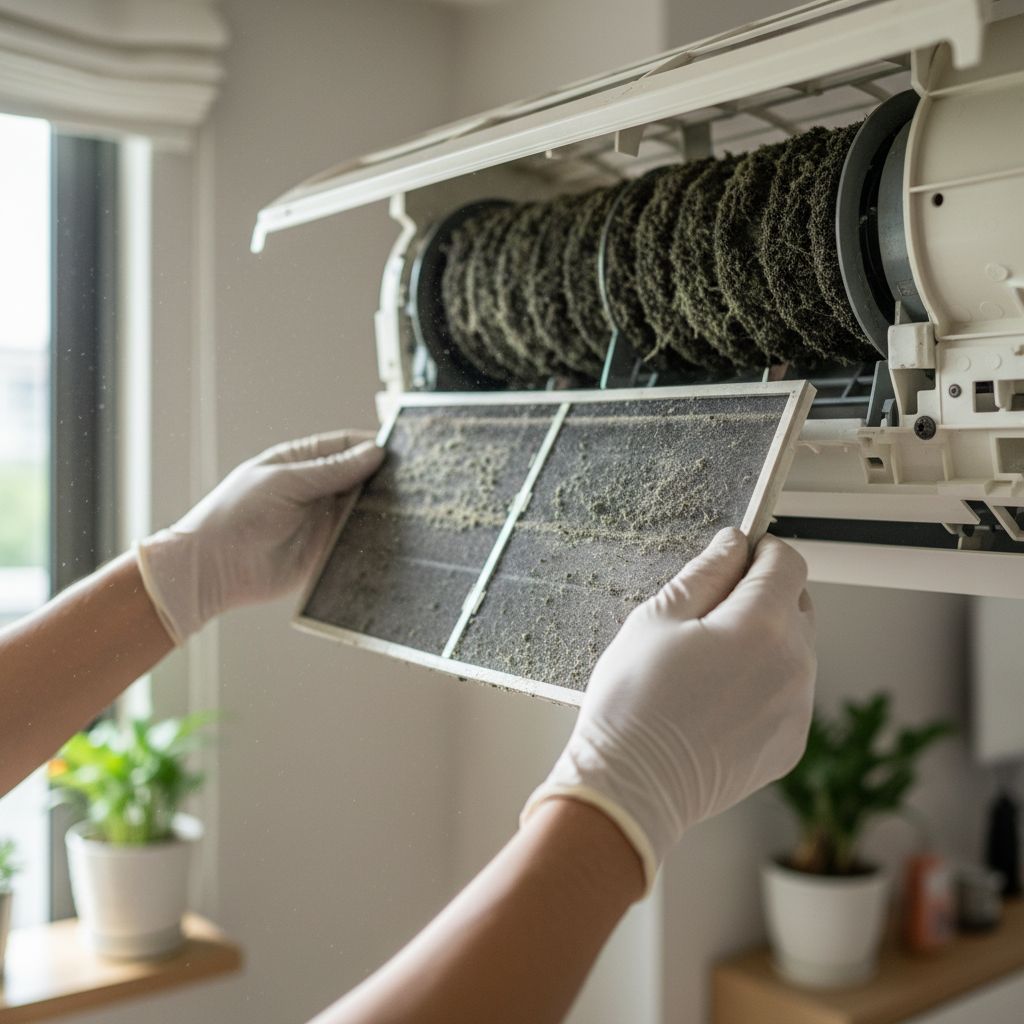
To understand why an air conditioner develops foul odours so rapidly in Singapore, you must first understand the environmental conditions unique to our tropical island. Singapore experiences year-round ambient temperatures between 25 and 34 degrees Celsius, accompanied by relative humidity levels frequently hovering between 70% and 95%. When hot, moisture-laden room air is pulled across the chilled aluminium cooling fins of your fan coil unit (FCU), moisture rapidly condenses into liquid water. Under normal circumstances, this water drains away seamlessly through the internal drainage tray and PVC pipe. However, in our humid climate, the interior of your indoor unit remains perpetually damp. This continuous dampness transforms the dark interior casing of your aircon into an ideal breeding ground for bacterial colonies, fungi, and stubborn mould formations.
When biological growth takes hold inside the evaporator coil, drainage trough, or rotary blower wheel, the air blowing into your room picks up volatile organic compounds and microbial spores. The result is a persistent, foul smell that degrades your indoor air quality, irritates your respiratory tract, and ruins the comfort of your living space. Dealing with an aircon smells bad situation requires an understanding of what causes these odours, how to diagnose them, and what professional treatments, such as a gentle steam wash or an intensive chemical wash, are required to restore clean, pure airflow.
1.1 High Humidity and Condensation Dynamics in Singapore Homes
The primary catalyst for an aircon bad odour Singapore problem is the sheer volume of condensation produced during everyday cooling cycles. When warm, moisture-saturated air from a Singapore room hits an evaporator coil operating at 6 to 10 degrees Celsius, rapid dehumidification occurs. Litres of water are extracted from your ambient indoor air every single night. In a standard 4-room HDB flat in Sengkang or Tampines running three bedroom units for eight hours, the combined air conditioning system can easily pull 10 to 15 litres of water from the air overnight.
This immense volume of moisture washes over dust, dead skin cells, pet dander, cooking oils, and fabric lint that have bypassed the plastic pre-filters. Over weeks and months, this organic debris settles at the base of the aluminium cooling fins and gathers inside the condensate drain pan. Because Singapore never experiences a dry, cold winter to naturally arrest microbial reproduction, the trapped organic sludge begins to decompose. Bacteria such as Pseudomonas and various fungal species proliferate within this warm, moist biofilm, releasing gaseous metabolic by-products directly into the conditioned airstream, causing that notorious musty aircon smell.
1.2 Daily Aircon Cycling in HDB and BTO Flats
In modern HDB and BTO flats, living habits significantly influence odour formation. Many working families turn their air conditioners on at 10:00 PM when going to sleep and switch them off abruptly at 6:30 AM before leaving for work. When the system shuts down, the compressor stops pumping refrigerant, but the interior components remain soaking wet. With all bedroom doors and windows closed during the day to keep out external heat and urban noise, there is zero natural ventilation. The trapped heat inside the room elevates the indoor temperature to 30 degrees Celsius while the damp fan coil unit sits in pitch darkness.
This daily cycling creates an incubator effect. The residual moisture inside the unit does not evaporate cleanly; instead, it stews with accumulated indoor dust. Over a span of a few months, a thin layer of micro-mould covers the plastic interior casing and the interior fan barrel. When the unit is powered on again the following evening, the initial surge of air carries a concentrated blast of sour, damp, and stale air that makes the entire room smell unpleasant.
1.3 Condominium and Landed Property Ventilation Traps
Condominiums and landed homes face their own unique ventilation challenges that exacerbate aircon odour problems. Many contemporary condominium master bedrooms feature en-suite bathrooms located directly opposite the aircon blower unit. When warm steam from evening showers drifts into the bedroom, the aircon unit pulls in this high-humidity, soap-residue-laden air. The microscopic soap and shampoo particles provide rich nutrients for fungal colonies sitting on the aluminium evaporator fins.
In landed properties, multi-storey layouts often suffer from thermal stratification, where hot, stagnant air accumulates on upper floors. When ducted or high-capacity wall-mounted units are operated intermittently, condensation stagnation in lengthy drainage pipe runs becomes a major issue. If drainage gradient slopes are shallow or run across long ceiling voids, stagnant water sits in the pipework, generating foul back-draft odours that travel straight back up the drain pan and blow out through the front louvres.
2. Decoding the Smells: What Different Aircon Odours Mean
Not all bad aircon smells are identical. The precise nature of the odour provides critical diagnostic clues regarding the mechanical, biological, or chemical failure occurring within your system. By identifying the exact scent profile, homeowners can determine whether the problem requires basic cleaning, a specialised sanitisation treatment, or urgent diagnostic repair by an experienced technician from Uncle 7 Aircon.
| Odour Profile | Probable Root Cause | Risk Level | Recommended Action |
|---|---|---|---|
| Musty / Damp / Mouldy | Microbial biofilm on cooling coil and blower wheel | Medium (Allergies/Spore spread) | Gentle Steam Wash or Chemical Wash |
| Sour / Vinegar / Stale Sweat | Decomposing bacterial sludge in drainage tray | Low to Medium | Deep coil cleaning and drain line vacuuming |
| Burning / Plastic / Electrical | Overheating blower motor, faulty PCB, or fried capacitor | High (Fire hazard) | Immediate shutdown and Aircon Repair inspection |
| Rotten Egg / Sewage | Dry drain trap connected to soil stack or trapped vermin | High (Toxic gas backflow) | Drain line reconfiguration and structural sanitisation |
| Sweet / Chemical / Ether | Refrigerant leak from copper piping or coil corrosion | High (System breakdown/Health) | Pressure testing and professional repair |
| Dead Animal / Putrid | Decomposed gecko, lizard, or rodent in casing | High (Biological hazard) | Complete unit dismantling and overhaul |
2.1 The Classic Musty Aircon Smell and Mould Infiltration
A musty aircon smell is by far the most prevalent complaint in Singapore. It smells like a damp basement, wet cardboard boxes, or laundry that has been left sitting in a washing machine for two days. This distinct odour is produced by microbial volatile organic compounds (mVOCs) released by actively growing mould colonies. When your unit operates, it blows these airborne fungal spores across your bed, furniture, and curtains.
A mouldy aircon is not merely an olfactory nuisance; it represents an active indoor air hazard. The black speckles frequently visible inside the horizontal swinging louvres are colonies of Cladosporium, Aspergillus, or Penicillium. These fungi thrive on the moisture generated across the cooling fins. If left untreated, the mould spreads deeper into the internal polystyrene insulation foam, embedding the odour so thoroughly that surface wipe-downs become completely ineffective.
2.2 Sour, Vinegar, or Stale Sweat Smells
If your indoor unit emits a sour, acidic, or vinegar-like scent, the primary culprit is usually bacterial decomposition within the drain pan. Specific bacteria, such as Acetobacter, convert trapped organic dust and skin flakes into acetic acid through anaerobic fermentation. This commonly occurs when the condensate tray has a slight dip or poor gradient, preventing complete water drainage.
Additionally, households with pets or individuals who exercise indoors frequently notice a stale sweat smell coming from the unit. The high-velocity blower pulls in evaporated sweat, sebum, and pet dander, which coat the wet aluminium fins. When the aircon switches from active compressor cooling to fan-only mode during temperature cycling, this built-up organic matter releases a sharp, sour odour that immediately blankets the room.
2.3 Burning, Electrical, or Plastic Odours
A burning smell coming from an aircon unit demands immediate, decisive action. If you detect an acrid scent resembling melting plastic, burning insulation, or overheated electronics, turn off the air conditioner at the main isolator switch immediately. This is not a biological cleaning issue; it is a severe mechanical or electrical fault that poses an imminent fire hazard.
Common causes of burning odours include:
- Overheated Blower Fan Motor: Worn motor bearings or seized fan shafts cause excessive electrical resistance, generating extreme heat that scorches the internal motor windings.
- Failing Printed Circuit Board (PCB): Voltage fluctuations or aged capacitors can short-circuit, scorching the circuit board resin and producing a pungent chemical burning scent.
- Loose Electrical Terminal Connections: High-resistance electrical connections at the terminal block can melt the plastic casing and wire insulation.
- Accumulated Lint on Heating Elements: In systems with defrost or auxiliary heating cycles, accumulated lint can singe against hot components.
If you experience any burning smells, do not attempt to run the unit. Book an emergency on-site diagnostic inspection via our aircon repair service to inspect the internal electrical framework safely.
2.4 Rotten Egg, Sulphur, and Sewage Smells
A smell resembling rotten eggs, sulphur, or open sewer gas indicates a dangerous cross-contamination issue between your aircon drainage system and the building's plumbing network. In many Singapore HDB flats and older condominiums, aircon drainage pipes are routed directly into bathroom floor traps or kitchen waste pipes. If the water seal inside the floor trap dries up, sewer gases containing hydrogen sulphide and methane are sucked backwards through the aircon drain line and discharged into your living areas.
Alternatively, a dead creature trapped within the internal chassis can produce a sickening, sulphur-rich stench. Geckos (house lizards) frequently enter the indoor unit through the rear trunking penetrations in search of warmth near the electrical enclosure. If a lizard touches high-voltage terminal contacts or gets wedged behind the cold evaporator coil, it dies, decomposes rapidly in the tropical heat, and generates an overwhelming stench of decay within 24 to 48 hours.
2.5 Chemical, Sweet, or Gas-Like Odours
If your aircon discharges a faintly sweet, chloroform-like, or artificial chemical smell, your system may be experiencing a refrigerant leak. Modern residential air conditioners in Singapore operate on hydrofluorocarbon (HFC) or difluoromethane refrigerants, predominantly R410A and R32. While these refrigerants are non-toxic in small quantities, an active leak within an enclosed bedroom can displace oxygen and compromise your health.
Refrigerant leaks occur due to formicary corrosion on the thin copper tubing of the evaporator coil or loose flare nut joints along the copper trunking runs. When the pressurised refrigerant escapes, it atomises compressor lubricating oil along with it, creating a sweet, solvent-like chemical smell. If you notice this odour alongside a noticeable drop in cooling performance or ice forming on the aluminium cooling fins, contact a qualified technician to conduct an on-site inspection and system pressure check.
2.6 Dead Animal or Decaying Rodent Smells
In ground-floor HDB units, shophouses, and landed properties in areas like Serangoon Gardens or Bukit Timah, rodents and larger pests occasionally infiltrate the ceiling voids or external trunking. If a rat or bird enters the internal housing and dies, the putrid odour of decay will make the room completely unlivable within days. Standard surface cleaning cannot resolve this; the entire unit must be dismounted, stripped down, and chemically sanitised to eradicate pathogenic residues.
3. The Science of Mould and Biofilm Inside Your Fan Coil Unit
To eliminate foul aircon odours permanently, it is vital to understand the microbiological ecosystem thriving inside an unmaintained air conditioning system. The internal environment of a wall-mounted fan coil unit provides the four fundamental requirements for life: moisture, darkness, constant temperature, and an abundant organic food supply.
When you look at your indoor unit, you only see the outer plastic cover and the primary dust filters. Behind these superficial layers lies a dense network of mechanical components that trap airborne pollutants and foster extensive biological growth over time.
3.1 Evaporator Coil Moisture and Dust Accumulation
The evaporator coil consists of hundreds of micro-thin aluminium fins pressed over serpentine copper tubing. The gap between each aluminium fin is less than a millimetre wide. As the high-velocity blower pulls room air through these microscopic gaps, fine particulate matter (PM2.5), skin scales, aerosol sprays, and cooking oil droplets adhere to the wet aluminium surfaces.
Over time, this mixture forms an insoluble, slimy matrix known as a biological biofilm. This biofilm acts as an impenetrable shield for bacteria and fungi, protecting them from routine surface wipe-downs. As the biofilm thickens, it restricts airflow across the coil, forcing the compressor to work harder, driving up your monthly SP Group electricity bill, and generating a persistent musty aircon smell every time the fan spins.
3.2 The Drainage Pan and Blocked PVC Drain Lines
Directly beneath the evaporator coil sits the condensate water collection tray. As condensation runs down the face of the aluminium fins, it collects in this shallow plastic trough before flowing outward through a 16mm or 20mm PVC drainage pipe. Because the water in this tray contains organic dust particles, it gradually transforms into a jelly-like microbial sludge, colloquially known among Singapore technicians as "aircon jelly".
This jelly-like slime consists of massive colonies of Zoogloea bacteria that produce thick extracellular polymeric substances. As the slime accumulates, it slows the drainage flow, creating stagnant puddles of foul-smelling water inside the tray. If the drain pipe blocks completely, the dirty water backs up and overflows, causing destructive wall leakages, peeling paint, ruined parquet flooring, and a severe aircon bad odour Singapore issue.
3.3 Cross-Flow Blower Fan Blade Contamination
Behind the evaporator coil sits the cross-flow blower wheel, a cylindrical barrel equipped with dozens of curved plastic blades rotating at speeds exceeding 1,000 RPM. As air is pulled through the damp cooling coil, moisture droplets escape into the blower housing. Dust particles stick to the curved trailing edges of every single fan blade.
Over months of operation, a thick, furry crust of black toxic mould builds up on these blades. This mould crust creates two severe problems:
- Severe Odour Generation: The mould crust is positioned directly in the high-velocity discharge airstream, blasting mould spores and musty odours directly into your room.
- Airflow Restriction and Imbalance: The uneven weight of mould deposits causes the blower wheel to wobble, straining the motor bearings and reducing cooling output by up to 40%.
3.4 Health Hazards of Mould Spores and Poor Indoor Air Quality
Operating a mouldy aircon in an enclosed bedroom is a direct threat to your family's respiratory health. Every breath you take in a room conditioned by a contaminated aircon introduces millions of microscopic fungal spores, hyphal fragments, and mycotoxins into your lungs. In Singapore, where childhood asthma and allergic rhinitis rates are among the highest in the world, uncleaned aircon units are a massive environmental trigger.
Common health symptoms associated with breathing mouldy aircon discharge include:
- Chronic morning sneezing, nasal congestion, and post-nasal drip.
- Itchy, watery, bloodshot eyes and throat irritation.
- Frequent unexplained headaches, brain fog, and fatigue.
- Severe asthma flare-ups and nocturnal coughing fits.
- Skin rashes, eczema breakouts, and hives triggered by airborne fungal allergens.
To learn more about maintaining optimal indoor air quality and protecting your family's health, explore our detailed educational resources in the knowledge hub.
4. Step-by-Step Diagnostic Guide: Tracing the Odour Source
Before deciding on the appropriate servicing method, you can perform a preliminary diagnostic assessment to locate the exact source of the bad smell. Follow this practical, step-by-step troubleshooting guide designed specifically for Singapore homeowners.
4.1 Inspecting Air Filters and Front Grilles
Start by isolating the simplest potential cause: the front pre-filters. Follow these steps safely:
- Switch off the aircon unit using the remote control.
- Gently lift the front intake grille until it clicks open.
- Slide out the two nylon mesh pre-filters.
- Examine the filters in natural daylight. If they are coated in a thick grey mat of dust, wash them thoroughly in a bathroom basin using cold tap water and a soft brush. Do not use hot water or harsh laundry detergents, as this can warp the plastic mesh.
- Allow the filters to dry completely in a shaded, well-ventilated area before reinstalling them. Never reinstall wet filters, as this introduces fresh moisture directly onto dry dust deposits.
If the bad odour vanishes after cleaning the filters, the problem was simply superficial dust accumulation. However, if the smell returns within 20 minutes of turning the unit back on, the contamination is rooted deeper inside the internal coil and blower assembly.
4.2 Checking the Condensate Tray and Water Level
With the front panel lifted and the filters removed, use a bright LED torch to inspect the lower drainage channel located beneath the aluminium fins. Look closely for signs of standing water or thick, gelatinous slime. If you notice murky water sitting motionless in the tray, your drainage pipe is partially choked. Stagnant water sitting in this tray for days turns foul and sour, requiring immediate clearing via high-pressure flushing or a dedicated chemical wash.
4.3 Examining the Blower Wheel and Interior Housing
Direct your torch beam into the horizontal air discharge opening at the bottom of the unit. Use your fingers to gently tilt the directional air louvres downward so you can see inside the dark cavity. Inspect the long cylindrical blower wheel:
- Do you see black, velvety spots lining the plastic inner curved casing?
- Are the individual blades of the fan wheel coated in thick, fuzzy grey grime?
- Is there white powdery residue or green fungal growth clinging to the internal polystyrene insulation?
If you observe any of these signs, your air conditioner is heavily infested with biological mould. Standard DIY sprays cannot penetrate this assembly safely or effectively; you need professional intervention to clean the blower wheel thoroughly.
4.4 Evaluating the Outdoor Condenser Unit and Trunking
Finally, inspect the external environment. If your outdoor condenser unit is installed on an HDB aircon ledge or condo balcony, check that the area is clean and free of pigeon droppings, dry leaves, or dead insects. Pigeon roosting on external aircon ledges is a widespread problem in estates like Jurong, Bedok, and Ang Mo Kio. Decomposing bird droppings on the outdoor coil reduce heat exchange efficiency and can allow external foul odours to be drawn into the building through structural gaps or nearby open windows.
5. Comparing Solutions: General Servicing, Gentle Steam Wash, Chemical Wash, and Overhaul
When addressing an aircon smells bad situation, choosing the right treatment method is crucial. Applying a superficial cleaning method to a deeply contaminated unit will waste your money, while using harsh chemicals on a lightly dusty unit is unnecessary. At Uncle 7 Aircon, we offer clear, transparent cleaning modalities tailored precisely to the condition of your air conditioning system.
5.1 Standard General Servicing for Light Odours
A standard general servicing is intended for regular, routine maintenance of units that are already in good operational health. During a general servicing session, our skilled technicians perform the following tasks:
- Clean and wash the front intake cover, louvres, and primary nylon air filters.
- Vacuum and flush the internal condensate drainage tray and accessible drainage pipework to prevent choke accumulation.
- Brush down the surface of the aluminium cooling fins to remove dry dust mats.
- Check electrical terminal connections and test overall operational cooling performance.
A standard general servicing takes approximately 15 minutes per unit. It is highly effective at preventing dust accumulation, but it cannot dissolve heavy biological biofilms or eliminate entrenched mould deep within the coil.
5.2 Gentle Steam Wash: Sanitising Without Toxic Chemicals
For homeowners who are sensitive to harsh chemical smells, families with newborn babies, asthmatic children, elderly parents, or indoor pets, Uncle 7 Aircon provides a specialised Gentle Steam Wash. This eco-friendly process uses superheated, high-pressure water vapour to sanitise your air conditioner naturally.
The high-temperature steam penetrates deep between the narrow aluminium fins, melting stubborn biological grime, destroying bacterial cell walls, and killing 99.9% of mould spores and dust mites on contact without relying on aggressive industrial acids. The gentle steam wash restores a fresh, neutral, odourless environment inside your home, leaving zero chemical aftertaste or lingering caustic fumes in your bedroom.
5.3 Chemical Wash for Stubborn Biofilms and Microbial Growth
When an air conditioner has been neglected for over a year, or when a heavy musty aircon smell refuses to budge, a professional chemical wash is required. In this procedure, the technician removes the front casing and applies an alkaline-based cleaning compound directly onto the aluminium evaporator fins, water collection tray, and blower wheel.
The chemical solution reacts with the biological sludge, foaming vigorously as it pushes out years of deeply embedded dirt, grease, and fungal matter. After allowing the chemical to dissolve the grime, the entire assembly is thoroughly flushed with clean high-pressure water to remove all chemical residues. A chemical wash takes approximately 30 minutes per unit and restores heavily clogged, foul-smelling units back to optimal cooling efficiency and pristine hygiene.
5.4 Chemical Overhaul: Total Dismantling for Severe Contamination
For the most severe cases of contamination, persistent foul odours, severe internal choking, or units that have not been serviced for several years, a full chemical overhaul is the definitive solution. Unlike a standard chemical wash conducted on the wall, an overhaul involves completely dismounting the entire indoor fan coil unit from your wall bracket.
Our technicians dismantle the unit down to its individual components: the evaporator coil, backplate, drain pan, cross-flow fan barrel, electronic control box, and polystyrene casing. Every single part is individually soaked in specialised chemical baths, scrubbed, sanitised, and dried before being reassembled and remounted on your wall. The refrigerant circuit is vacuum-pumped, reconnected, and checked for pressure integrity, with gas top-up included if needed. An overhaul takes approximately 60 minutes per unit and restores severely neglected units to near-factory condition.
5.5 Service Comparison and Suitability Table
| Service Type | Primary Odour Target | Duration | Key Benefits | Best Suited For |
|---|---|---|---|---|
| General Servicing | Minor dust, light stuffiness | ~15 min/unit | Fast, budget-friendly, maintains efficiency | Routine maintenance every 2-3 months |
| Gentle Steam Wash | Musty smell, fungal spores, pet odours | ~20-25 min/unit | 100% non-toxic, chemical-free, kills 99.9% bacteria | Sensitive households, babies, allergy sufferers |
| Chemical Wash | Heavy sour odours, thick jelly, stubborn mould | ~30 min/unit | Dissolves stubborn biofilm, clears blocked trays | Neglected units (6-12 months unserviced) |
| Chemical Overhaul | Severe decay, rotten smell, chronic leaks | ~60 min/unit | Total mechanical dismantling, includes gas top-up | Severely fouled units, zero maintenance history |
6. Pricing and Service Transparency with Uncle 7 Aircon
At Uncle 7 Aircon, we believe in complete clarity, honesty, and simplicity when it comes to servicing your air conditioning systems. Many homeowners in Singapore have experienced frustration with opaque pricing structures, surprise add-on fees, aggressive sales tactics, or restrictive lock-in contracts from other providers. We do things differently.
6.1 Clear, Upfront Pricing Without Hidden Contracts
Uncle 7 Aircon operates strictly on a one-time servicing model. We do not offer maintenance contracts, nor do we lock you into long-term quarterly packages that you may never fully utilise. You book us exactly when you need us, and you pay only for the work performed on that day. Furthermore, we maintain complete transparency regarding our warranty policy: we offer no warranty on standard cleaning services, which allows us to keep our direct servicing rates among the most competitive across all of Singapore.
Whether you reside in an HDB flat in Punggol, a BTO in Yishun, a condominium in Bishan, or a landed estate in Bukit Panjang, our pricing remains straightforward and transparent.
6.2 Pricing Comparison Table for Singapore Homes
Review our official, transparent pricing schedule below. To see our full pricing structure, visit our dedicated pricing page.
| Service Package | Number of Units | Price (SGD) | Estimated Time per Unit |
|---|---|---|---|
| General Servicing Routine filter, tray & coil wash |
1 Unit | $40 | ~15 mins |
| 2 Units | $100 | ~15 mins | |
| 3 to 9 Units | $18 per unit | ~15 mins | |
| 10+ Units | $10 per unit | ~15 mins | |
| Chemical Wash Deep chemical foam & flush on wall |
1 Unit | $60 | ~30 mins |
| 2 Units | $80 | ~30 mins | |
| 3 Units | $90 | ~30 mins | |
| 4+ Units | $28 per unit | ~30 mins | |
| Chemical Overhaul Full unit dismantling, includes gas top-up |
Any quantity | $100 flat per unit | ~60 mins |
| Aircon Repair Diagnostic On-site inspection & troubleshooting |
Per visit | $40 inspection fee | Varies |
6.3 Diagnostic Inspections and Aircon Repairs
If your air conditioner is emitting an electrical burning smell, making abnormal grinding noises, or failing to blow cold air altogether, routine washing may not be enough. Uncle 7 Aircon provides comprehensive on-site diagnostic inspections for a flat fee of $40. Our technician will visit your premises, inspect the mechanical and electrical components, identify the exact component failure, and provide a clear, transparent quote before carrying out any aircon repair work. If you choose to replace an old, inefficient unit completely, we also provide professional aircon installation support across all major brands.
6.4 Operational Hours and Service Policy
Uncle 7 Aircon operates daily with our working schedule starting at 9:00 AM. We do not provide after-hours or late-night emergency servicing. This structured operational model ensures that our technicians arrive well-rested, focused, and equipped to deliver exceptional workmanship on every single job. To book your preferred appointment slot, connect directly with our friendly team via WhatsApp or call us at 9431 1589, or visit our website at uncle7aircon.sg.
7. Common Mistakes Singapore Homeowners Make When Aircon Smells Bad
When faced with a foul-smelling aircon, many homeowners attempt quick DIY fixes that worsen the underlying problem or damage their air conditioning system. Avoiding these common mistakes will save you time, money, and unnecessary frustration.
7.1 Masking Bad Odours with Fragrance Diffusers and Sprays
The most common mistake is attempting to mask foul aircon odours by placing reed diffusers, automatic aerosol fresheners, or scented gel blocks directly in front of the air intake grille. While this may temporarily cover up the bad smell, it causes severe damage to your cooling coil.
Air fresheners release volatile essential oils and synthetic fragrance compounds into the air. When sucked through the damp cooling coil, these oils coat the aluminium fins with a sticky, tacky residue. This sticky layer accelerates the accumulation of airborne dust, creating a denser food source for mould and bacteria. Within a few weeks, the synthetic fragrance combines with the decomposing mould, generating a sickening sweet-and-sour stench that is far harder to eliminate.
7.2 DIY Chemical Sprays from Supermarkets and Hardware Stores
Many hardware stores sell off-the-shelf "DIY Aircon Foam Sprays" promising instant cleaning without rinsing. In reality, these self-rinse sprays are often disastrous for modern air conditioners in Singapore:
- Corrosive Residue: Many consumer foam cans contain harsh acidic compounds that corrode the delicate blue hydrophilic coating on modern aluminium coil fins, leading to premature gas leaks.
- Inadequate Flushing: Because DIY users cannot thoroughly flush the unit with high-pressure water inside a bedroom, the dissolved dirt and chemical foam wash down into the condensate tray and solidify, causing a complete drain pipe blockage.
- Electrical Damage: Spraying liquid chemicals carelessly into the unit risks splashing the high-voltage printed circuit board (PCB) or fan motor, resulting in costly electrical short circuits.
7.3 Running the System on Dry Mode Continuously
Some homeowners believe that running their air conditioner exclusively in "Dry Mode" (dehumidification mode) will dry out the mould and stop the odour. In fact, Dry Mode prioritises maximum moisture extraction by running the compressor at low fan speeds. This leaves the cooling coil soaked with condensation for prolonged periods, accelerating mould development rather than eliminating it.
7.4 Postponing Professional Maintenance
Ignoring a foul-smelling aircon in hopes that the smell will clear on its own is a costly gamble. As the biological biofilm thickens, your aircon's heat exchange efficiency drops, forcing your compressor to run at maximum load. This causes higher electricity bills from SP Group, puts unnecessary thermal strain on the compressor, and increases the likelihood of sudden mechanical failure. Dealing with an odour problem early via a gentle steam wash or chemical wash is significantly cheaper than replacing a burnt-out compressor motor later.
8. Preventive Strategies: Keeping Your Indoor Air Fresh Every Day
Once your air conditioner has been thoroughly sanitised by Uncle 7 Aircon, following simple daily habits will keep your indoor air fresh, clean, and odour-free for months to come.
8.1 The 15-Minute Fan-Only Shutdown Routine
The most effective daily habit for preventing a musty aircon smell is the fan-only shutdown technique. Before turning off your air conditioner completely for the day or morning, adjust the operating mode from "Cool" to "Fan Only" (or increase the set temperature to 30 degrees Celsius) and let the fan run on high speed for 15 minutes.
Running the fan without active compressor cooling allows the high-velocity room air to dry the aluminium cooling fins and blower wheel thoroughly. By eliminating lingering moisture before shutting down the unit, you deprive mould and fungal spores of the damp environment they need to multiply.
8.2 Bi-Weekly DIY Filter Cleaning Protocols
Set a calendar reminder to wash your primary nylon dust filters every two to three weeks. Regular filter washing takes less than five minutes per unit but prevents up to 70% of airborne household dust from reaching the damp cooling coil behind them. Always allow the mesh filters to dry completely before reinserting them into the front chassis.
8.3 Managing Room Humidity and Air Circulation
During daylight hours when your air conditioner is turned off, open your bedroom windows and internal doors to encourage natural cross-ventilation. Allowing fresh outdoor air and natural sunlight to circulate through the room lowers indoor relative humidity, disperses stale volatile organic compounds, and prevents damp pockets from forming around your air conditioning unit.
Additionally, ensure your bathroom door is kept firmly closed after hot showers to prevent warm moisture from drifting into your air-conditioned bedroom.
8.4 Establishing a Regular Servicing Schedule
In Singapore's demanding climate, regular servicing is essential for maintaining clean airflow and energy efficiency. We recommend the following maintenance cadence:
- Every 2 to 3 Months: Schedule a standard general servicing to flush the drain pan and clean the primary mechanical assemblies.
- Every 6 to 12 Months: Opt for a Gentle Steam Wash or targeted chemical wash to sanitise the deep aluminium coil fins and blower wheel thoroughly.
- Every 2 to 3 Years: Consider a full chemical overhaul for heavily used bedroom units to refresh the entire system.
Read our latest maintenance insights and technical articles in our articles section to keep your system performing at its best.
9. Brand-Specific Odour Quirks and Engineering Nuances
Different aircon manufacturers utilise distinct structural designs, coatings, and drainage mechanisms. Our technicians at Uncle 7 Aircon have extensive experience troubleshooting and servicing all major aircon brands found across Singapore homes.
9.1 Mitsubishi Electric and Daikin Starmex / iSmile Systems
Mitsubishi Electric (such as the popular Starmex series) and Daikin (including the iSmile series) are the two most common brands in Singapore HDB and condominium estates. Both brands feature exceptionally tight aluminium fin spacing engineered for high energy efficiency. However, this compact fin design means that if servicing is neglected, dust and microbial biofilms pack tightly between the fins, leading to a concentrated musty aircon smell.
Daikin units feature an integrated drain pan moulded directly into the rear casing in several models, making thorough drain flushing essential during general servicing to prevent jelly blockages. Mitsubishi Electric units benefit greatly from regular blower wheel cleaning, as their dual-barrier coating requires gentle, precise washing to avoid damaging the protective surface.
9.2 Panasonic, Midea, and Fujitsu Inverter Units
Panasonic units equipped with nanoe-X air purification technology do an excellent job of neutralising airborne bacteria, but the physical evaporator coil and condensate tray still collect dust that requires periodic professional washing. Midea inverter systems, popular in many newer BTO developments for their exceptional value, feature robust cooling performance but have deep plastic drainage channels that require regular high-pressure flushing to avoid sour water accumulation. Fujitsu systems feature high-density multi-path heat exchangers that benefit immensely from our superheated Gentle Steam Wash to sanitise hard-to-reach internal surfaces.
9.3 LG, Samsung, and Hitachi Wall-Mounted Units
LG and Samsung units frequently incorporate smart sensors and complex automated louvre mechanisms. When cleaning these units, technicians must take care to protect the sensitive electronic stepper motors and sensor boards from moisture ingress. Hitachi systems, known for their stainless-steel pre-filters and components, resist surface mould adherence well, but still require regular chemical flushing of the PVC drainage pipes to maintain an odour-free environment in humid Singapore conditions.
10. Professional Odour Elimination Across Singapore Estates
No matter where you live in Singapore, an aircon bad odour Singapore issue can ruin your home comfort. Uncle 7 Aircon provides reliable, professional, and transparent air conditioning servicing across all major residential and light commercial districts across the island.
10.1 Island-Wide Service: From Punggol to Jurong West
Our experienced mobile service teams cover all Singapore estates, delivering prompt, punctual service straight to your doorstep:
- North & North-East: Punggol, Sengkang, Hougang, Yishun, Woodlands, Sembawang, Ang Mo Kio.
- East: Tampines, Pasir Ris, Bedok, Marine Parade, Geylang, Kallang.
- West: Jurong East, Jurong West, Bukit Batok, Bukit Panjang, Choa Chu Kang, Clementi.
- Central & South: Bishan, Toa Payoh, Queenstown, Bukit Merah, Novena, Tanglin.
To check servicing availability in your specific neighbourhood, explore our comprehensive service areas guide.
10.2 Booking Your One-Time Appointment with Uncle 7 Aircon
Eliminating foul aircon odours does not require expensive contracts or confusing service tiers. With Uncle 7 Aircon, you get upfront, honest pricing, skilled technicians, and dedicated attention to detail on every single unit.
Ready to breathe clean, fresh, odour-free air again? Contact Uncle 7 Aircon today to schedule your one-time servicing appointment:
- WhatsApp / Phone: 9431 1589
- Website: uncle7aircon.sg
- Operating Hours: Starting 9:00 AM daily (No after-hours service)
- Direct Contact: Reach our customer support team directly through our contact page.
Frequently Asked Questions (FAQ)
Why does my aircon smell musty when I first switch it on?
A musty smell upon switching on your aircon is caused by mould and bacterial colonies flourishing on the damp evaporator coil, condensate drain pan, and blower fan wheel. When the unit is powered on, the initial burst of air carries volatile organic compounds and spores released by these microorganisms straight into your room. Scheduling a professional gentle steam wash or chemical wash will thoroughly eliminate this biological growth.
Can a bad aircon smell make my family sick?
Yes. Breathing air from a foul-smelling, mouldy air conditioner circulates millions of microscopic fungal spores, dust mites, and bacteria into your indoor environment. This can trigger allergic reactions, chronic morning sneezing, eye irritation, persistent coughs, skin eczema flare-ups, and severe asthma attacks, particularly in young children and the elderly.
What is the difference between a Gentle Steam Wash and a Chemical Wash?
A Gentle Steam Wash uses superheated high-pressure water vapour to naturally kill 99.9% of bacteria, mould, and pathogens without any harsh chemicals, making it ideal for sensitive individuals, infants, and allergy sufferers. A chemical wash uses specialised chemical solutions to dissolve heavy, stubborn biological sludge, grease, and severe coil blockages in neglected units.
How much does Uncle 7 Aircon charge for general servicing and chemical wash?
Our general servicing rates are $40 for 1 unit, $100 for 2 units, $18 per unit for 3 to 9 units, and $10 per unit for 10 or more units. Our chemical wash rates are $60 for 1 unit, $80 for 2 units, $90 for 3 units, and $28 per unit for 4 or more units. For a full breakdown of all service costs, visit our pricing page.
Does Uncle 7 Aircon offer long-term maintenance contracts or warranties?
No. Uncle 7 Aircon operates exclusively on a transparent, one-time servicing basis without any long-term maintenance contracts or package lock-ins. You only pay for the service you book. We also do not offer warranties on standard cleaning, which allows us to provide some of the most competitive, upfront prices in Singapore.
What should I do if my aircon smells like burning plastic or wires?
If you detect a burning, plastic, or electrical odour, turn off the air conditioner at the main electrical isolator switch immediately to prevent a potential fire hazard. This smell indicates an overheating fan motor, failing printed circuit board (PCB), or damaged electrical wiring. Contact our team to schedule an on-site diagnostic inspection via our aircon repair service.
Why does my aircon smell sour like vinegar?
A sour or vinegar-like smell is caused by anaerobic bacteria fermenting trapped organic matter, such as dead skin cells, pet dander, and dust, inside stagnant water sitting in the condensate drain tray. Clearing the drain line and performing a thorough deep coil wash will eliminate the sour bacteria and restore fresh airflow.
How often should I have my aircon serviced in Singapore to prevent bad odours?
In Singapore's hot, humid climate, we recommend scheduling a standard general servicing every 2 to 3 months for regularly used bedroom units. Additionally, a deeper gentle steam wash or chemical wash should be performed once or twice a year to prevent deep-seated mould from accumulating on the blower wheel and coil.
Can I spray perfume or air freshener into the aircon to fix the smell?
No, you should never spray perfume, room fresheners, or essential oils into your air conditioner. The oily compounds cling to the wet aluminium fins, creating a sticky surface that attracts more dust, accelerates mould growth, and eventually creates an even worse, sickening odour that is harder to remove.
What are Uncle 7 Aircon's operating hours and how do I book an appointment?
Uncle 7 Aircon operates daily starting from 9:00 AM. We do not provide after-hours or late-night service. To book an appointment, simply call or WhatsApp us at 9431 1589, or submit an enquiry directly through our official website at uncle7aircon.sg.
RELATED ARTICLES
Aircon Tripping the Power Breaker in Singapore: Causes, Dangers and Repair Costs
When you switch on your air conditioner on a hot Singapore afternoon only to hear a sudden click from your distribution box (DB box) followed by complete darkness in your room, you are experiencing an
Aircon ProblemsAircon Making Noise in Singapore: Rattling, Buzzing, Gurgling and Clicking Fixed
When you return home after a long, humid day in Singapore, the last thing you want to experience is an aircon making noise in your bedroom or living room. In Singapore, air conditioning is not an occa
Aircon ProblemsAircon Leaking Water? Here's Why and How to Fix It
Is your aircon leaking water? Learn the 10 common causes, from blocked drain pipes and dirty filters to frozen coils, low refrigerant and drainage problems, plus what you can safely check and when to call a professional.