

Understanding Multi-Split Air Conditioning Systems in Singapore
Choosing the right cooling system for your home in Singapore is one of the most critical decisions you will make during renovation or replacement. With year-round ambient temperatures hovering between 28 and 34 degrees Celsius, coupled with relative humidity levels consistently exceeding 80 percent, air conditioning is not a luxury in Singapore, but an essential home utility. When browsing the market, you will immediately encounter terms like system 2 aircon, system 3 aircon Singapore, and system 4 aircon. Understanding how these multi-split inverter systems work, how they are structured, and how they interact with Singapore housing layouts is the foundation of making an energy-efficient, cost-effective investment.
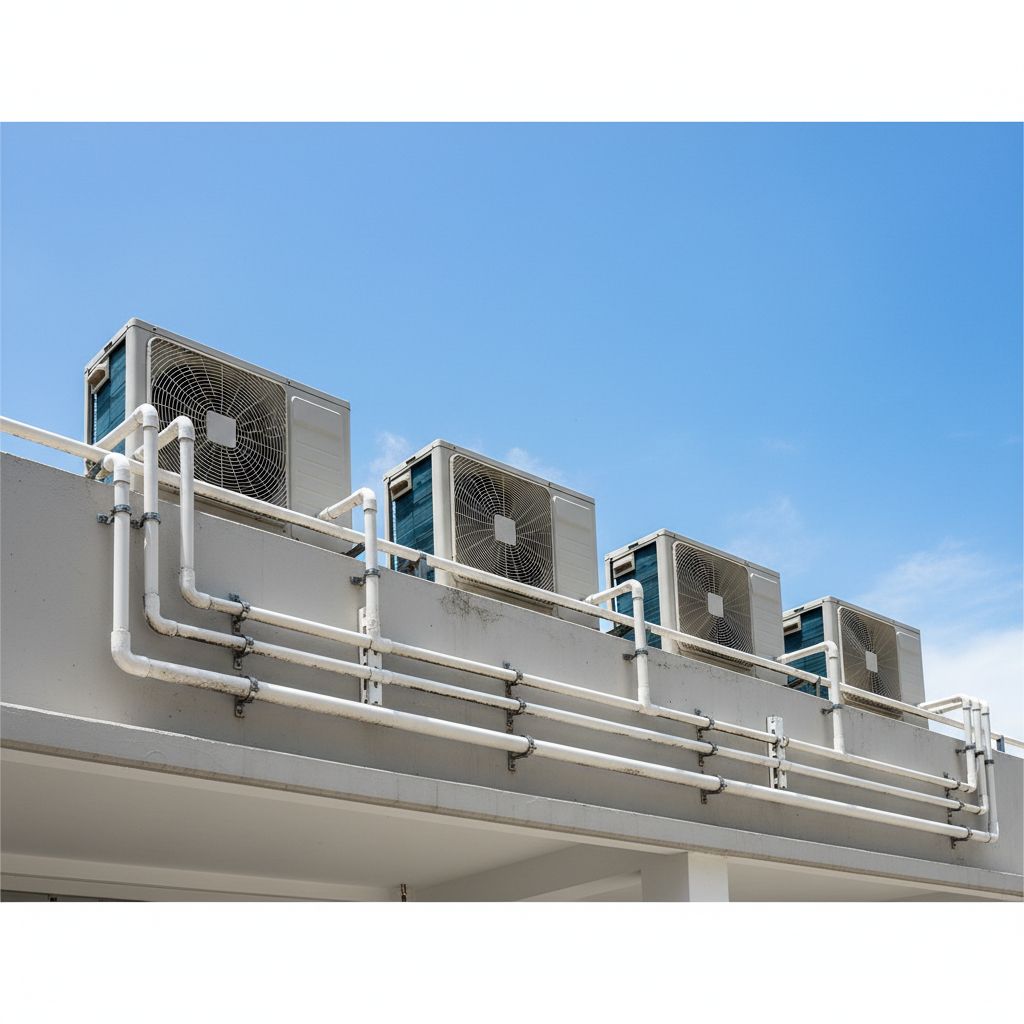
A multi-split air conditioning system connects multiple indoor fan coil units (frequently abbreviated as FCUs or indoor units) to a single external condenser compressor unit located on your aircon ledge. This architectural setup allows individual room climate control while conserving the limited exterior ledge space allocated by the Housing and Development Board (HDB) and Urban Redevelopment Authority (URA) in private condominiums. Choosing between a system 2 aircon, system 3 aircon Singapore, or system 4 aircon depends directly on your floor plan, household cooling patterns, electrical load allocations, and total thermal demand.
What Does System 1, System 2, System 3, and System 4 Mean?
The numerical designation following the word system refers strictly to the number of indoor fan coil units connected to a single outdoor condenser unit. A System 1 (often called a single-split) features one indoor unit wired and piped to one outdoor condenser. A system 2 aircon connects two indoor units to one shared outdoor condenser. A system 3 aircon Singapore homeowners commonly install connects three indoor units to one outdoor unit, and a system 4 aircon powers four indoor units from a single outdoor unit. There are even System 5 configurations available for larger multi-generational flats, penthouses, and landed properties.
Each indoor unit operates independently via its own infrared remote controller or smart home Wi-Fi module. You can turn on the master bedroom aircon at 24 degrees Celsius while keeping the other indoor units switched off, or run all units simultaneously during family gatherings. Inside the shared outdoor condenser, an electronic expansion valve (EEV) and an inverter compressor adjust the refrigerant flow dynamically, delivering cooling output only to the indoor units that demand it.
Why Multi-Split Inverter Systems Dominate Singapore Homes
In modern Singapore housing, multi-split inverter systems are the standard for several distinct structural and economic reasons:
- Aircon Ledge Constraints: Most modern HDB Build-To-Order (BTO) flats in estates like Tengah, Punggol, Sengkang, and Bidadari feature a single, compact external aircon ledge. This ledge is engineered to accommodate only one outdoor condenser unit. Installing multiple single-split units is structurally impossible because there is simply no physical space on the ledge.
- Electrical Load Regulations: HDB imposes strict electrical limits on residential units. Older HDB flats built before 1994 may have a 30-ampere main electrical supply, while newer BTO units have a 40-ampere supply. Multi-split inverter systems draw less starting current compared to older non-inverter models, complying with HDB maximum electrical loading guidelines.
- Energy Efficiency and Lower SP Bills: Multi-split inverter compressors adjust their motor speed instead of shutting down and restarting abruptly. This smooth modulation saves significant electricity, helping homeowners maintain lower monthly SP Services utility bills, especially when choosing 5-tick National Environment Agency (NEA) energy-rated models.
- Aesthetic Trunking and Piping Routes: Running multi-split piping through a single structural penetration or internal ceiling trunking route keeps false ceilings neat and minimizes visible PVC trunking across your living room and bedroom walls.
The Anatomy of a Multi-Split System: Condenser and Fan Coil Units
To understand the engineering behind these systems, it helps to break down their core mechanical components:
The Outdoor Condenser: The outdoor unit houses the inverter compressor, the heat exchanger coil, the condenser fan motor, and the main printed circuit board (PCB). The compressor pressurizes eco-friendly R32 or R410A refrigerant gas, converting it into a high-pressure liquid while expelling indoor heat into the outdoor air. Modern condensers from brands like Daikin, Mitsubishi Electric, Panasonic, and Midea feature anti-corrosion blue fins or gold fins to withstand Singapore humid, salty coastal air.
The Indoor Fan Coil Units (FCUs): Each indoor wall-mounted unit contains an evaporator coil, a blower fan wheel, an air filter mesh, an electronic control receiver, and a condensation drainage pan. Liquid refrigerant flows into the indoor evaporator coil, where it expands and evaporates into gas, absorbing heat from your room air. The blower fan circulates warm room air over the chilled coil, returning cool air into your bedroom or living space. Over time, dust, skin flakes, and airborne oils accumulate on these coils and blower wheels, requiring regular aircon servicing to prevent blockages, stale smells, and reduced airflow.
Sizing and BTU Calculations for Singapore HDB, BTO, and Condominiums
Accurate aircon sizing BTU calculation is the single most vital technical step when planning an aircon installation Singapore project. BTU stands for British Thermal Unit, an international unit of heat energy. In air conditioning terminology, BTU per hour (BTU/hr) measures the thermal extraction capacity of an air conditioner. If you select an indoor unit with insufficient BTU, the room will remain warm, humid, and stuffy. Conversely, oversizing an indoor unit can lead to rapid cycling, poor dehumidification, and unnecessary upfront equipment costs.
The Fundamentals of Aircon Sizing BTU in Tropical Singapore
In temperate climates, heating and cooling calculations account for low ambient humidity and insulated double-glazed windows. In Singapore, our calculation must account for high ambient relative humidity, concrete wall heat retention, large window surfaces exposed to morning or afternoon sun (west-facing units), and heat generated by electronic appliances and occupants.
A standard baseline formula used by air conditioning engineers in Singapore is:
Cooling Capacity (BTU/hr) = Room Area (in square feet) x 55 to 65 BTU/sq ft
For standard bedrooms with minimal direct sunlight and 2.6-metre to 2.8-metre ceiling heights, 55 to 60 BTU per square foot is sufficient. For rooms with full-height west-facing windows, top-floor units beneath an uninsulated concrete roof deck, or open-concept living and dining rooms connected to an open kitchen, the multiplier should be increased to 65 to 75 BTU per square foot.
Room-by-Room BTU Calculation Guide for HDB Flats and Condos
Singapore residential properties generally follow standard room dimensions. Below is a practical breakdown for determining the correct indoor fan coil unit sizing across different room categories:
- HDB Common Bedroom (approx. 90 to 120 sq ft): A 9,000 BTU/hr (often referred to as a Class 25 or 1.0 horsepower) fan coil unit is the standard choice. It provides rapid cooling down to 22-25 degrees Celsius within 10 to 15 minutes, even during hot afternoons.
- HDB Master Bedroom (approx. 130 to 180 sq ft): A 9,000 BTU/hr unit is adequate for basic sleeping comfort, but a 12,000 BTU/hr (Class 35 or 1.5 horsepower) unit is strongly recommended if you have an attached en-suite bathroom door left open, large wardrobe carpentry, or home office desktop setups that generate heat.
- HDB 3-Room / 4-Room Living and Dining Area (approx. 220 to 300 sq ft): Requires a minimum of 18,000 BTU/hr (Class 50 or 2.0 horsepower) to 20,000 BTU/hr. If the living room opens directly into an open-concept kitchen, consider stepping up to a 22,000 or 24,000 BTU/hr unit.
- HDB 5-Room / Executive Apartment Living Area (approx. 320 to 450 sq ft): Demands a 24,000 BTU/hr (Class 60/71 or 2.5 to 3.0 horsepower) unit. Sizing smaller will cause the blower to run at maximum speed continuously without reaching the target temperature on hot days.
- Condominium Master Bedroom with Walk-In Wardrobe (approx. 180 to 240 sq ft): Requires a 12,000 to 15,000 BTU/hr unit depending on window orientation and glass facade heat gain.
Condenser Capacity vs Total Indoor Fan Coil BTU: The Diversity Factor
One common point of confusion among homeowners is why the combined BTU ratings of the indoor units often exceed the rated maximum output of the outdoor condenser. For example, a system 4 aircon outdoor condenser might have a maximum cooling capacity of 28,000 to 30,000 BTU/hr, while the four indoor units connected to it total 45,000 BTU/hr (one 18,000 BTU living room unit + three 9,000 BTU bedroom units).
This engineering principle is known as the Diversity Factor (or simultaneous usage ratio). Air conditioning manufacturers like Mitsubishi Electric (Starmex series) and Daikin (iSmile and iSmileEco series) design their multi-split inverter compressors under the engineering reality that most households do not run all indoor units at maximum output simultaneously. During the day, the living room unit runs while bedrooms are idle. At night, the three bedroom units run while the living room unit is turned off. The inverter condenser dynamically shifts its full 28,000 BTU capacity to whichever units are currently active.
Sizing Pitfalls: Undersizing vs Oversizing Consequences
Failing to perform proper aircon sizing BTU evaluation results in ongoing practical problems:
- Consequences of Undersizing: The compressor runs at maximum frequency for hours, unable to pull room temperature down to the thermostat setpoint. This spikes your monthly SP Group electricity bill, causes excessive wear on compressor bearings, and fails to strip humidity from the air, leaving the room feeling damp.
- Consequences of Oversizing: The unit drops room temperature so quickly that it satisfies the thermostat before running long enough to condense ambient moisture out of the air. This leads to cold, clammy indoor air and short-cycling, which stresses the electronic expansion valves and main printed circuit boards.
System 2 Aircon: Configuration, Ideal Floor Plans, and Sizing
A system 2 aircon is designed specifically for smaller living spaces or supplementary cooling zones. It features one outdoor condenser powering exactly two indoor fan coil units. In Singapore, this system is primarily deployed in 2-Room Flexi HDB flats, 3-Room HDB flats where cooling is only required in two bedrooms, studio apartments, dual-key condominium units, and small commercial shop offices.
Common Layouts for System 2 Aircon in 2-Room Flexi and 3-Room HDB Flats
In a standard 2-Room Flexi BTO flat (measuring roughly 38 to 48 square metres), a system 2 aircon provides complete whole-house cooling. One indoor fan coil unit is installed in the master bedroom, and the second unit is installed in the open living and dining area. Because the total floor area is compact, a System 2 condenser with an output capacity of 18,000 to 20,000 BTU/hr can easily power both indoor units simultaneously without performance throttling.
In a 3-Room HDB flat (comprising a master bedroom, one common bedroom, and a living area), homeowners on a tighter budget often opt for a system 2 aircon dedicated exclusively to the two bedrooms. The living room is cooled using ceiling or standing fans. This setup drastically lowers equipment acquisition costs, keeps monthly electricity consumption low, and simplifies internal trunking layouts along bedroom corridors.
System 2 Sizing Breakdown: BTU Distribution by Room
When selecting a system 2 aircon, the most common indoor unit capacity pairings in Singapore include:
- 9,000 BTU + 9,000 BTU (Class 25 + Class 25): The perfect configuration for cooling two standard-sized bedrooms in an HDB or condo development. Both units can run at full capacity simultaneously overnight without exceeding the condenser limit.
- 9,000 BTU + 12,000 BTU (Class 25 + Class 35): Ideal for a common bedroom paired with a larger master bedroom that includes an attached bathroom or heavy wardrobe carpentry.
- 9,000 BTU + 18,000 BTU (Class 25 + Class 50): Configured for 2-Room Flexi BTO units, where the 9,000 BTU unit cools the bedroom and the 18,000 BTU unit cools the open living and dining hall.
Pros and Cons of Choosing a System 2 Multi-Split Setup
Evaluating the practical advantages and limitations of a System 2 configuration ensures it aligns with your household lifestyle:
- Advantages: Lower initial purchase price compared to System 3 and 4; compact outdoor condenser footprint that fits easily on small aircon ledges; lower refrigerant charge required; straightforward maintenance and cleaning schedules.
- Disadvantages: Leaves common living areas uncooled in 3-Room, 4-Room, or 5-Room flats; cannot be expanded later to add a third or fourth indoor unit without replacing the outdoor condenser unit entirely.
System 3 Aircon Singapore: The Gold Standard for 4-Room HDB and 3-Bedroom Condos
The system 3 aircon Singapore market represents the highest sales volume of all residential air conditioning systems in the country. A System 3 connects three indoor fan coil units to a single high-efficiency outdoor condenser. It is widely considered the default choice for Singapore most common residential property type: the 4-Room HDB flat (which features one master bedroom and two common bedrooms), as well as standard 3-bedroom private condominiums.
Why System 3 Aircon Singapore Is the Most Popular Configuration
The overwhelming majority of Singaporean families prioritize air conditioning in the bedrooms where family members sleep for 7 to 9 hours every night. In a standard 4-Room HDB layout (approx. 90 to 93 square metres), installing a system 3 aircon Singapore package allows dedicated cooling in the master bedroom, common bedroom 1, and common bedroom 2. This leaves the living room naturally ventilated or cooled by high-volume ceiling fans.
Because the indoor units operate primarily during evening and nighttime hours when outdoor ambient temperatures drop to 26-28 degrees Celsius, the condenser operates at optimal thermodynamic efficiency. Modern 5-tick System 3 condensers from Daikin, Mitsubishi Electric, Panasonic, Midea, and Fujitsu easily handle all three bedrooms concurrently while drawing modest electrical currents.
Recommended BTU Setups for Three Bedrooms (Master + 2 Common)
When configuring your system 3 aircon Singapore setup, industry-standard sizing allocations include:
- Master Bedroom: 9,000 BTU/hr or 12,000 BTU/hr (depending on whether the master room has an expanded footprint or open wardrobe).
- Common Bedroom 1: 9,000 BTU/hr (Class 25), providing ample cooling for children, guests, or a dedicated home study.
- Common Bedroom 2: 9,000 BTU/hr (Class 25), delivering balanced airflow across standard 100-square-foot layouts.
- Condenser Rating: Typically 24,000 to 28,000 BTU/hr total compressor capacity, easily managing three 9,000 BTU units running simultaneously at full inverter modulation.
If you prefer cooling your living room instead of one of the common bedrooms, you can configure a System 3 as: 18,000 BTU (Living Room) + 12,000 BTU (Master Bedroom) + 9,000 BTU (Common Bedroom 1). In this arrangement, the living room unit is utilized during the day, and the bedroom units are run at night, balancing the load perfectly across the inverter compressor.
Power Draw, SP Services Electricity Bills, and 5-Tick Energy Efficiency
Energy consumption is a primary concern for Singapore homeowners managing monthly utility bills. The National Environment Agency (NEA) rates air conditioners from 1 to 5 ticks based on their Annual Energy Efficiency Ratio (AEER). Investing in a 5-tick system 3 aircon Singapore model provides dramatic long-term savings over 2-tick or 3-tick budget alternatives.
Running three 5-tick indoor units overnight (8 hours daily at 25 degrees Celsius) typically consumes between 4.5 and 7.0 kWh of electricity per night depending on outdoor ambient heat and room insulation. Based on current SP Group electricity tariffs (approx. $0.30 to $0.35 per kWh including GST), running a 5-tick System 3 nightly costs roughly $45 to $75 per month in electricity. Routine maintenance through regular aircon servicing keeps the evaporator coils clean, preventing power consumption from creeping up by 15 to 30 percent over time due to clogged heat exchangers.
System 4 Aircon: Whole-Home Cooling for 5-Room HDB, Executive Flats, and Landed Homes
A system 4 aircon is the ultimate whole-home cooling solution for larger HDB flats (such as 4-Room, 5-Room, 3Gen, and Executive Apartments), luxury condominiums, and landed homes. By connecting four indoor fan coil units to a single heavy-duty outdoor condenser, a System 4 setup cools all three bedrooms plus the main living and dining hall, ensuring complete climate control throughout the entire property.
Full Coverage: Living Room Plus Three Bedrooms Under One System 4 Aircon
In a standard 5-Room HDB flat (approx. 110 to 115 square metres) or an Executive Condominium (EC), the floor plan is divided into distinct communal and private zones. A system 4 aircon bridges both zones with a single external machine:
- Living & Dining Hall: Cooled by a high-capacity 18,000, 22,000, or 24,000 BTU/hr indoor unit to handle family gatherings, entertainment, and weekend dining.
- Master Bedroom: Cooled by a 12,000 or 15,000 BTU/hr unit.
- Common Bedroom 1: Cooled by a 9,000 BTU/hr unit.
- Common Bedroom 2: Cooled by a 9,000 BTU/hr unit.
This layout ensures no room is left uncooled. On warm weekends or during transboundary haze events in Singapore, the entire family can enjoy clean, chilled, and dehumidified air across every square foot of the home.
High BTU Living Room Requirements (18,000 to 24,000 BTU)
The living room in a Singapore 4-Room or 5-Room flat presents the greatest thermal load challenge. It features broad window spans, direct corridor access, open passageways to the kitchen, and higher human traffic. Installing an undersized 12,000 BTU unit in a 300-square-foot living hall will leave the space warm, and the blower will operate at full blast noisily without lowering the room temperature effectively.
For this reason, a system 4 aircon paired with an 18,000 BTU (Class 50) or 24,000 BTU (Class 60/71) fan coil unit in the living room is essential. These larger units feature wider blower drums, larger evaporator surface areas, and dual motorized horizontal vanes that project cool air up to 10-12 metres across the living room and dining corridor.
Single Condenser vs Dual Condenser (System 3 + System 1) Configurations
While a single system 4 aircon condenser is the most common installation choice, some homeowners with larger aircon ledges (such as older Executive Apartments in Woodlands, Pasir Ris, or Tampines, or private condos) evaluate whether to install one System 4 or split the load into a System 3 plus a System 1:
Option A: Single System 4 Condenser
- Requires only one electrical isolator switch on the aircon ledge.
- Takes up less physical space on the ledge, leaving room for maintenance access.
- Lower initial equipment purchase cost than two separate condensers.
- Risk: If the single outdoor compressor or main inverter PCB fails, all four indoor units lose cooling until an aircon repair technician resolves the breakdown.
Option B: System 3 (Bedrooms) + System 1 (Living Room)
- Provides full operational redundancy; if one condenser breaks down, the other continues cooling.
- Allows full independent cooling power for the living room without sharing condenser capacity with bedrooms.
- Limitation: Requires two separate electrical points, dual piping penetrations, and an aircon ledge large enough to satisfy HDB spacing regulations.
Head-to-Head Comparison: System 2 vs System 3 vs System 4
To help you determine the optimal configuration for your specific home and budget, the table below outlines the core technical specifications, typical apartment pairings, and estimated equipment cost brackets across multi-split systems in Singapore.
| System Type | Typical Indoor Units | Outdoor Condenser Capacity | Ideal Singapore Home Type | Est. Equipment & Install Cost (SGD) |
|---|---|---|---|---|
| System 2 Aircon | 2 x 9,000 BTU or 9,000 + 12,000/18,000 BTU | 18,000 - 20,000 BTU/hr | 2-Room Flexi BTO, 3-Room HDB (Bedrooms only), Studio Condo | $1,800 - $2,600 |
| System 3 Aircon | 1 x 12,000 BTU + 2 x 9,000 BTU | 24,000 - 28,000 BTU/hr | 4-Room HDB (3 Bedrooms), 3-Bedroom Condo, 3-Room HDB (Whole Unit) | $2,600 - $3,800 |
| System 4 Aircon | 1 x 18,000/24,000 BTU + 3 x 9,000/12,000 BTU | 28,000 - 34,000 BTU/hr | 4-Room / 5-Room HDB (Whole Flat), Executive Flat, 4-Bedroom Condo | $3,600 - $5,200 |
Feature and Application Comparison Matrix
Each multi-split configuration caters to different living habits. When choosing, consider how your family occupies the home:
- System 2: Best for young couples or retirees occupying 2-Room or 3-Room flats where the living room is well-ventilated naturally, or rental properties where capital expenditure is tightly managed.
- System 3: The ultimate standard for working families. It focuses cooling energy where it matters most: delivering deep, quiet sleep in all bedrooms without paying for unneeded living room cooling infrastructure.
- System 4: The premium whole-house experience. Essential for families with young children, elderly parents, or work-from-home professionals who spend extensive daytime hours in the living and dining hall.
Equipment Costs vs Long-Term Running Expenses
While equipment purchase price increases as you move from a system 2 aircon up to a system 4 aircon, the operating electricity costs depend primarily on the number of units running simultaneously and their NEA tick ratings. A 5-tick System 4 running two bedroom units overnight uses virtually the same amount of electricity as a 5-tick System 2 running two units. The inverter compressor simply modulates down to match the exact thermal load demanded.
Structural Constraints: HDB Aircon Ledge Space and Electrical Loading Limits
Before confirming your purchase, you must verify your flat structural limits:
- Ledge Dimensions: Modern BTO aircon ledges are strictly engineered. A large System 4 condenser can measure up to 950mm wide by 750mm high and 340mm deep, weighing over 60kg. Ensure there is at least 100mm to 150mm clearance around the condenser for proper ventilation and technician maintenance access.
- Electrical Isolator Switch: HDB requires all aircon installations to connect to an external rotary isolator switch rated at 16A or 20A on the ledge. Ensure your circuit breaker board (DB box) has a dedicated aircon circuit.
- Maximum Current Demand: Older flats with upgraded 40A main supplies must ensure total household electrical demand (aircon, water heaters, induction cooktops) does not exceed the main breaker limit.
Critical Considerations for BTO Aircon Installation in Singapore
Moving into a new HDB Build-To-Order (BTO) flat in estates like Tengah, Tampines North, Bukit Batok West, or Kallang/Whampoa is an exciting milestone. However, executing a flawless BTO aircon setup requires careful coordination with your interior designer, main renovation contractor, and air conditioning installer.
Pre-Piping and Trunking Routes in New HDB BTO Estates
In BTO flats, air conditioning refrigerant copper pipes, electrical signal wiring, and PVC drainage pipes are routed through visible wall trunking or concealed within false ceilings and box-ups. Planning your trunking route early during the space-planning phase avoids unsightly, winding trunking runs that cut across feature walls or bedroom entryways.
Key trunking planning rules include:
- Shortest Direct Path: Keep the total pipe run between the indoor unit and outdoor condenser as short as possible (ideally under 15 metres per unit). Shorter pipe runs reduce pressure drops, increase cooling efficiency, and minimize the volume of refrigerant required.
- Consistent Downward Slope: Condensation drain pipes rely entirely on gravity. Trunking must maintain a continuous downward gradient of at least 1:100 toward the drainage outlet in your master bathroom or kitchen floor trap. Never allow trunking to dip and rise, as this creates standing water traps that cause jelly slime buildup and indoor water leaks.
- Strategic Concealment: Run trunking along wardrobe tops, above bedroom doors, or inside false ceiling pelmets to keep the aesthetic clean and uncluttered.
HDB Regulations, Drainage Gradient, and Condensation Prevention
HDB strictly regulates residential air conditioning installations to protect structural integrity and neighborly harmony:
- Drainage Discharge: Aircon condensation drain pipes must discharge directly into an approved internal floor trap or toilet stack. Discharging condensation water onto external ledges, open facade walls, or external rain gutters is strictly illegal under HDB bylaws.
- Condenser Mounting: Outdoor condensers must be placed securely on the reinforced concrete aircon ledge. Mounting brackets must be corrosion-resistant stainless steel with rubber vibration dampers to prevent low-frequency hums from transmitting through bedroom walls.
- HDB Installation Report: Installers must submit an e-filing installation report to HDB within 14 days of completion, verifying that structural and electrical regulations have been met.
Choosing Between Reputable Brands: Daikin, Mitsubishi Electric, Panasonic, Midea
Selecting the right brand for your BTO aircon project ensures long-term reliability and readily available spare parts in Singapore:
- Mitsubishi Electric (Starmex Series): Renowned in Singapore for whisper-quiet indoor blower operations (as low as 19 dB), exceptionally durable Easy Clean design that allows homeowners to open the horizontal vanes for easy cleaning, and robust PCB reliability.
- Daikin (iSmile & iSmileEco Series): The market pioneer with sophisticated smart Wi-Fi integration, compact condenser dimensions designed specifically for tight BTO ledges, and high energy efficiency ratings.
- Panasonic (AEROWINGS / nanoe-X Series): Features advanced air purification technology that actively inhibits bacteria, viruses, and indoor odours while delivering long-distance shower cooling airflow.
- Midea: Offers outstanding value for budget-conscious homeowners, featuring reliable inverter performance, robust build quality, and competitive price points for System 2, 3, and 4 configurations.
- Fujitsu, Hitachi, LG, and Samsung: Excellent alternative options offering unique aesthetic designs, dual inverter compressors, and specialized filtration systems suitable for various residential layouts.
Aircon Installation Singapore: Best Practices, Piping Materials, and Insulation
The operational lifespan and energy efficiency of your aircon installation Singapore project depends 50 percent on the brand you buy, and 50 percent on the quality of the installation materials and workmanship. Even the most expensive 5-tick Japanese air conditioner will leak water, sweat along the trunking, and lose refrigerant within months if installed using sub-standard materials.
Copper Pipe Thickness (G22 vs G23) and Armaflex Class 0/1 Insulation
When reviewing installation quotations, always demand strict specifications on materials rather than accepting standard entry-level contractor packages:
Copper Pipe Gauge: Modern R32 and R410A refrigerants operate under significantly higher operating pressures than older R22 gas. Installers must use Gauge 22 (G22, approx. 0.71mm wall thickness) copper pipes. Budget contractors often cut costs by using thinner Gauge 23 (G23, approx. 0.61mm) or Gauge 24 copper pipes, which are prone to pinhole micro-punctures, cracking at flare joints, and catastrophic gas leaks over time.
Insulation Material and Thickness: Thermal insulation sleeves prevent warm, humid room air from coming into contact with freezing copper refrigerant pipes. If the insulation is too thin or poor in quality, condensation (sweating) will form along the entire trunking route, causing water damage to false ceilings, wall paint, and parquet flooring.
- Insulation Thickness: Standard insulation is 3/8-inch thick. Upgrading to 1/2-inch (12.7mm) high-density insulation is strongly recommended for all Singapore homes, particularly inside false ceilings and concealed box-ups.
- Insulation Brand: Insist on closed-cell elastomeric foam insulation from reputable brands like Armaflex (Class 0 or Class 1) or Thermaflex, which provide superior thermal resistance and fire safety ratings.
Why Proper Drainage Gradient and 16mm vs 13mm PVC Pipes Matter
Water leakage is the most frequent complaint among Singapore aircon owners. To ensure flawless drainage for years to come:
- Drainage Pipe Diameter: Upgrade from standard 13mm internal diameter PVC drain pipes to heavy-duty 16mm or 19mm insulated drainage pipes. The wider diameter drastically reduces the risk of dust and microbial jelly clogging the pipe.
- Drainage Insulation: All drainage pipes running through internal trunking must be fully insulated. Cold condensation water flowing through an uninsulated drain pipe will cause the exterior of the pipe to sweat inside the trunking, leading to hidden leaks.
- Dedicated Gradient Clamps: Ensure the installer secures the drainage pipe with gradient clamps inside the trunking to prevent pipe sagging over time.
Commissioning, Vacuuming, and Pressure Testing Before Handover
Professional installation concludes with a rigorous technical commissioning procedure:
- Triple Evacuation / Vacuuming: The technician must connect a vacuum pump and digital micron gauge to the copper pipe system for at least 15 to 30 minutes. This removes all atmospheric air, nitrogen, and moisture from the lines before releasing refrigerant. Moisture left in the pipes reacts with compressor oil to form corrosive hydrofluoric acid, destroying the compressor.
- High-Pressure Nitrogen Leak Test: Pressurizing the lines with dry nitrogen ensures every flare joint and brazed connection is 100 percent airtight.
- Temperature Delta Measurement: After running the system for 15 minutes, the installer measures the temperature difference between the return air intake and the supply air discharge. A healthy system exhibits a delta of 8 to 12 degrees Celsius.
Post-Installation Care and Maintenance Costs with Uncle 7 Aircon
Once your system 2 aircon, system 3 aircon Singapore, or system 4 aircon is installed and running smoothly, regular preventative maintenance is essential to preserve cooling power, protect indoor air quality, and prevent premature breakdowns. In Singapore warm and humid climate, air conditioners collect dust, skin cells, pet dander, and airborne grease daily. Combined with internal condensation, this creates a fertile breeding ground for mould, bacterial slime, and fungus inside the fan coil unit.
Uncle 7 Aircon is a dedicated Singapore air conditioning maintenance specialist serving HDB flats, BTO units, private condominiums, landed homes, and small commercial offices across all regions of Singapore (including Jurong, Tampines, Woodlands, Ang Mo Kio, Bedok, Punggol, Sengkang, Bukit Batok, and Queenstown). Uncle 7 Aircon operates on a transparent, honest, one-time servicing model: no pushy long-term contracts, no recurring subscriptions, and no hidden charges.
Uncle 7 Aircon begins operations at 9:00 AM daily (no after-hours service). Please note that Uncle 7 Aircon offers one-time on-demand servicing and does not offer warranties or long-term maintenance contracts. Every service is carried out transparently and professionally by experienced technicians specializing in all major brands, including Midea, Daikin, Mitsubishi Electric, Panasonic, Fujitsu, Hitachi, LG, and Samsung.
Routine Maintenance Schedule for System 2, System 3, and System 4 Aircon
To keep your system running at peak performance, follow this maintenance schedule tailored for Singapore conditions:
- Every 2 Weeks (DIY): Remove the front mesh filters from your indoor units, wash them under running tap water, dry them completely in the shade, and snap them back in.
- Every 3 Months (Professional General Servicing): Book a professional aircon servicing to flush drainage pipes, clean the evaporator surface, vacuum the blower fan wheel, and inspect operating pressures.
- Every 6 to 12 Months (Deep Chemical or Steam Cleaning): Perform a chemical wash or Gentle Steam Wash to dissolve stubborn dirt, eliminate mould colonies, and restore factory airflow.
- Every 2 to 3 Years (Chemical Overhaul): When fan coil units exhibit heavy internal choking, jelly clogs, or foul odours, perform a complete chemical overhaul to strip the unit down to bare components for deep chemical immersion.
General Servicing vs Chemical Wash vs Chemical Overhaul vs Gentle Steam Wash
Understanding the difference between cleaning techniques ensures you choose the exact service your air conditioner requires:
1. General Servicing (~15 minutes per unit): The technician vacuums and washes the primary dust filters, wipes down the external front cover, cleans the horizontal louvers, clears the interior condensation drain pan using high-pressure flushing, and vacuums the drainage outlet. This prevents water clogs and keeps airflow fresh.
2. Chemical Wash (~30 minutes per unit): Specialized chemical cleaning foam is applied directly to the indoor evaporator coils, blower fan wheel, and internal water tray while mounted on the wall. The chemical foam breaks down accumulated grease, sticky dust, and fungal spores that water alone cannot remove, restoring heat transfer efficiency.
3. Chemical Overhaul (~60 minutes per unit): The indoor fan coil unit is completely dismantled and removed from the wall. The evaporator coil, blower wheel, electronic PCB, motor bearings, and drain tray are separated. The coil is soaked in an intensive chemical bath to strip away years of deeply embedded corrosion, limescale, and jelly slime. Reassembled with lubricated bearings, this service restores heavily choked units to near-new operating efficiency and includes a gas top-up if needed.
4. Gentle Steam Wash: A natural, deep-cleaning alternative that utilizes high-temperature, pressurized hot water vapour to sanitize evaporator coils and blower fans. The Gentle Steam Wash kills 99.9% of bacteria, dust mites, and mould spores instantly through thermal heat without using harsh chemical solutions, making it the ideal choice for households with newborns, elderly family members, allergy sufferers, or sensitive respiratory conditions.
Transparent Pricing Table for Uncle 7 Aircon Services
Uncle 7 Aircon believes in complete price transparency. Below is the full pricing schedule for all residential air conditioning services across Singapore:
| Service Category | Number of Units | Uncle 7 Aircon Price (SGD) | Estimated Duration |
|---|---|---|---|
| General Aircon Servicing | 1 Unit | $40 | ~15 mins |
| 2 Units | $100 | ~30 mins | |
| 3 to 9 Units | $18 per unit | ~15 mins / unit | |
| 10+ Units | $10 per unit | ~15 mins / unit | |
| Chemical Wash | 1 Unit | $60 | ~30 mins |
| 2 Units | $80 | ~60 mins | |
| 3 Units | $90 | ~90 mins | |
| 4+ Units | $28 per unit | ~30 mins / unit | |
| Chemical Overhaul | Per Unit (Flat Rate) | $100 / unit (Gas top-up included if needed) | ~60 mins / unit |
| Gentle Steam Wash | Per Unit | Contact for customized quote (Hot vapour sanitization) | ~30-45 mins / unit |
| Diagnostic Aircon Repair | On-Site Inspection | $40 diagnostic inspection fee (Transparent quote before work) | ~30 mins |
For complete details on our servicing rates across all property types, visit our pricing guide or learn more about our islandwide reach in our service areas directory. You can also browse technical insights in our knowledge hub and explore helpful maintenance guides in our articles section.
Troubleshooting Common Post-Installation Aircon Problems
Even with high-quality equipment, air conditioners in Singapore can encounter operational issues due to intense daily usage, environmental dust, and thermal stress. Recognizing early warning signs allows you to book an aircon repair diagnostic before minor glitches turn into expensive component failures.
Water Leaking and Blocked Drainage Trays
Water dripping down your bedroom wall or spurting out of the blower fan is the single most common aircon issue in Singapore. It occurs when dust and airborne bacteria mix with condensation water in the internal drain tray, forming a thick, gelatinous bacterial sludge (often called jelly slime). This slime clogs the 16mm drainage pipe connection, causing condensed water to overflow the internal pan.
A high-pressure drainage flush during routine aircon servicing or a thorough chemical wash will clear the blockage and restore unrestricted gravity drainage immediately.
Aircon Not Cold: Refrigerant Leaks, Gas Top-Up, and Diagnostic Inspections
When your indoor unit blows warm room-temperature air despite setting the remote control to 18 degrees Celsius, the problem is typically caused by one of three issues:
- Refrigerant Gas Leakage: Pinhole cracks in copper piping, loose flare nuts on the aircon ledge, or corroded evaporator u-bends allow R32 or R410A gas to escape slowly. The system loses cooling capacity and the copper pipes on the outdoor condenser may exhibit white frost or ice buildup.
- Faulty Compressor Capacitor or Inverter PCB: Inverter circuit board components on the outdoor unit can fail due to electrical surges or heat exposure, preventing the compressor motor from spooling up.
- Severely Choked Coils: Thick layers of compacted dirt block airflow through the evaporator coil, preventing heat exchange.
Uncle 7 Aircon provides an on-site diagnostic inspection for a flat $40 inspection fee. Our technician tests refrigerant pressures, measures electrical current draws, and pinpoints the exact root cause, providing a transparent quote before carrying out any repair work. If a chemical overhaul is required, any necessary gas top-up is included at no additional charge.
Foul Odours, Mould Growth, and Jelly Slime Buildup
If your air conditioner emits a sour, musty, or vinegar-like smell when powered on, active mould and mildew colonies have taken root inside the dark, damp interior housing of the fan coil unit. Standard filter washing cannot reach these internal surfaces. A deep sanitization using our Gentle Steam Wash or an intensive chemical overhaul removes the bio-film completely, neutralizing foul odours and restoring clean, healthy indoor air.
To schedule your one-time servicing or diagnostic inspection, contact Uncle 7 Aircon via WhatsApp or call us directly at 9431 1589, or visit our official website at uncle7aircon.sg. We operate daily starting from 9:00 AM, ready to help you keep your home cool and comfortable all year round. Reach out through our contact page to secure your preferred morning or afternoon appointment.
Frequently Asked Questions (FAQ)
What is the main difference between a System 2, System 3, and System 4 aircon?
The number refers strictly to the quantity of indoor fan coil units connected to a single outdoor condenser compressor unit. A system 2 aircon powers two indoor units, a system 3 aircon Singapore package powers three indoor units, and a system 4 aircon powers four indoor units. All operate independently inside individual rooms while sharing the outdoor condenser.
How do I know what aircon sizing BTU I need for my HDB bedroom?
For standard HDB common bedrooms measuring approximately 90 to 120 square feet, a 9,000 BTU/hr (Class 25) fan coil unit is the ideal size. For master bedrooms measuring 130 to 180 square feet, or rooms with significant afternoon sun exposure, a 12,000 BTU/hr (Class 35) unit is recommended to ensure fast, energy-efficient cooling.
Can I install a System 4 aircon in a 4-Room BTO flat?
Yes. In a 4-Room BTO flat, a system 4 aircon allows you to install one indoor unit in the living and dining room (typically 18,000 to 24,000 BTU) and one 9,000 BTU unit in each of the three bedrooms. This provides complete whole-house cooling from a single outdoor condenser located on your BTO aircon ledge.
Why does Uncle 7 Aircon offer one-time servicing without maintenance contracts?
Uncle 7 Aircon believes in maximum flexibility, honest pricing, and zero pressure for homeowners. Rather than locking you into rigid 1-year or 2-year maintenance contracts, we offer affordable on-demand one-time general servicing, chemical washing, and chemical overhauls whenever your system actually requires it.
How much does general aircon servicing cost with Uncle 7 Aircon?
Our general aircon servicing is priced transparently based on the quantity of units serviced in a single visit: 1 unit is $40, 2 units are $100, 3 to 9 units are $18 per unit, and 10 or more units are just $10 per unit. Each general servicing takes approximately 15 minutes per unit.
What is the difference between a chemical wash and a chemical overhaul?
A chemical wash ($60 for 1 unit, $80 for 2 units, $90 for 3 units, or $28 per unit for 4+ units) applies chemical cleaning foam to the coils and blower while the unit remains mounted on the wall (~30 mins/unit). A chemical overhaul (flat $100 per unit, ~60 mins/unit) completely dismantles the unit from the wall for total chemical immersion of the coil and includes a refrigerant gas top-up if needed.
What is the Gentle Steam Wash offered by Uncle 7 Aircon?
The Gentle Steam Wash is a natural, chemical-free deep-cleaning treatment that uses high-temperature pressurized steam vapour to sanitize evaporator coils and blower fans. It eliminates 99.9% of bacteria, fungus, and dust mites without using harsh chemicals, making it ideal for homes with babies, elderly family members, or respiratory sensitivities.
What aircon brands does Uncle 7 Aircon service and repair?
Uncle 7 Aircon services, cleans, and repairs all major air conditioning brands in Singapore, including Midea, Daikin, Mitsubishi Electric, Panasonic, Fujitsu, Hitachi, LG, and Samsung across HDB, BTO, condo, landed, and small commercial properties.
Why is my newly installed aircon leaking water inside my bedroom?
Water leakage is usually caused by a choked condensation drainage pipe, an improper downward drainage pipe gradient, or gelatinous bacterial slime accumulation in the internal drain pan. Having a technician perform high-pressure drain flushing or general servicing will clear the obstruction and resolve the leak immediately.
How do I book an appointment with Uncle 7 Aircon?
You can book an appointment by sending a WhatsApp message or calling Uncle 7 Aircon directly at 9431 1589, or by visiting uncle7aircon.sg. Our team starts at 9:00 AM daily across all regions of Singapore. We do not offer after-hours service or long-term warranties, focusing instead on high-quality, transparent, one-time on-site servicing.
RELATED ARTICLES
Office and Commercial Aircon Servicing in Singapore: Costs, Scheduling and Downtime
Operating a thriving business in Singapore requires an environment where employees can focus, clients feel welcome, and sensitive office equipment remains protected from the relentless tropical heat a
ComparisonsBest Aircon Brands in Singapore 2026: Daikin vs Mitsubishi vs Midea vs Panasonic
Selecting the best aircon brand Singapore homeowners can trust is one of the most critical decisions when renovating a new BTO flat in Punggol, upgrading an existing resale flat in Tampines, or outfit
ComparisonsGentle Steam Wash vs Chemical Wash: Which Aircon Clean Does Your Home Need?
Singapore sits just one degree north of the equator, creating an environment characterised by high ambient temperatures and year-round relative humidity frequently exceeding 80 percent. In this relent